Description
Patchouli essential oil is the great base note of the natural fragrance world - dark, earthy and instantly recognisable. Steam-distilled from the cured leaves of Pogostemon cablin, a bushy tropical member of the mint family, it smells the way a forest floor feels: warm soil, dry wood, a trace of dark cocoa and sweet balsam. On the sauna stones it turns steam slow and meditative; in a blend it anchors lighter oils and makes them last. It is also that rare essential oil that genuinely improves with age.
This entry covers where patchouli comes from, how it really smells, how to dose it on the stones, and how to blend it with the rest of the collection. For a full ritual walkthrough, see our dedicated patchouli guide, or start broader with the complete guide to sauna scents.
What Patchouli Is and Where It Comes From
Pogostemon cablin is a leafy shrub native to the islands of Southeast Asia. Curiously, the living plant gives little away: the famous aroma develops only after harvest, when the leaves are dried, baled and lightly fermented before steam distillation. That curing stage is what builds the deep, wine-dark character no fresh leaf possesses. The resulting oil is dominated by patchoulol and other heavy sesquiterpenes - large, slow-evaporating molecules that explain both its persistence and its unusual ability to mature in the bottle.
Most of the world's patchouli is grown in Indonesia, above all on Sumatra and Sulawesi, with significant harvests in India and Sri Lanka. Our oil is responsibly sourced from Indonesian and Indian distillers and bottled in UV-protective dark glass.
Patchouli's history is a trade story. In the nineteenth century, dried patchouli leaves were packed between Kashmir shawls and silks to keep moths away on the long voyage to Europe - so reliably that the scent itself became proof a shawl was genuine, and European weavers had to perfume their imitations to sell them. From there patchouli moved into perfumery, where it remains one of the most important base notes and fixatives in classic compositions. Its 1960s reputation as the scent of the counterculture is only the most recent chapter of a much older story.
Scent Profile: Earth, Wood and Dark Sweetness
Honestly described, patchouli smells of damp earth after rain, dry aged wood and bittersweet cocoa, wrapped in a musky, balsamic sweetness. A freshly distilled oil carries a slightly sharp, green, almost inky top note; give the bottle a year or three and that edge melts into something smoother, rounder and quietly sweet. On the scent compass above, patchouli sits firmly at the earthy, warm end of the map - about as far from sparkling citrus as an oil can be.
Two practical things follow from this profile. First, patchouli is persistent: it lingers on skin, textiles and sauna wood for hours, so a light hand pays off. Second, it is a foundation rather than a headline - used sparingly it deepens and steadies a blend without shouting over it.
In the Sauna
Patchouli counts as a strong oil in our sitewide dosing system, so use 2-3 drops per 500 ml of water - noticeably less than a mild oil like lavender or pine. In the enclosed heat of a sauna its heaviness multiplies, and two drops of patchouli do the work of five of something lighter.
- Step 1: Fill your sauna bucket or ladle bowl with about 500 ml of warm water.
- Step 2: Add 2-3 drops of patchouli - start with 2 if your sauna is small or you are new to the scent - and stir well with the ladle.
- Step 3: Pour a little of the scented water over the hot stones at a time, letting each wave of steam rise and settle before the next.
- Step 4: Never drip pure, undiluted oil onto the stones. It can scorch instantly, producing acrid smoke and a real fire risk instead of fragrance.
The steam that comes off is dark, warm and grounding - closer to a monastery library than a spa in character. It suits the last session of the evening beautifully, when the goal is to slow down rather than wake up. Many sauna-goers add a single drop of bergamot to the same bucket to lift the earthiness with a thread of light.
At Home
Outside the sauna, patchouli is one of the most versatile oils in the range - as long as you respect its strength.
- Diffuser: 2-4 drops in the water reservoir. In smaller rooms, 2 is plenty; the scent builds rather than fades.
- Body oil: Dilute to roughly 2% - about 12 drops per 30 ml of a carrier such as jojoba or sweet almond oil - for a warm, long-lasting natural skin scent. Patch test first.
- Linen and room spray: 10-15 drops stirred into 20 ml of high-proof unscented alcohol and topped up to 100 ml with water, shaken before each use. Because the oil is a deep amber colour, spot test delicate or pale fabrics first.
- Wardrobe and drawers: A few drops on a cotton pad tucked among woollens is the traditional use - the same trick the shawl merchants relied on.
Blending Guide
Patchouli is the classic fixative: its heavy molecules slow the evaporation of lighter oils, so a blend keeps its character for hours instead of minutes. The safest formula is to treat patchouli as the smallest part of any mix. All partners below come from our 24-oil collection - you can browse the full range in the shop.
| Partner Oil | Suggested Ratio | The Mood It Makes |
|---|---|---|
| Lavender | 2 drops lavender : 1 drop patchouli | The classic evening wind-down - soft herbal calm over warm earth. |
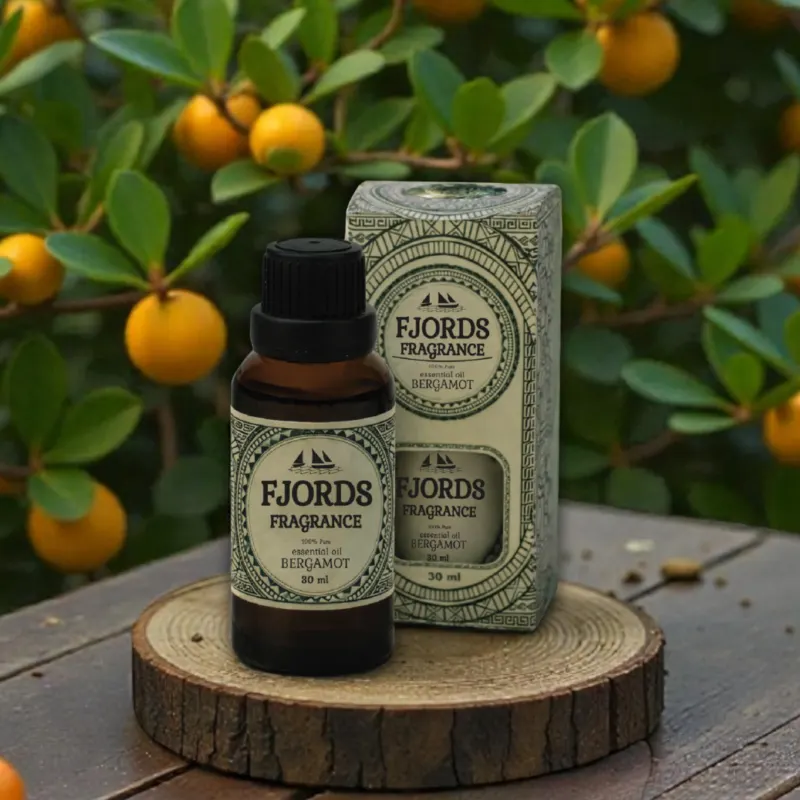
| Bergamot | 2 drops bergamot : 1 drop patchouli | Bright citrus with a shadow underneath - balanced, polished, quietly elegant. |
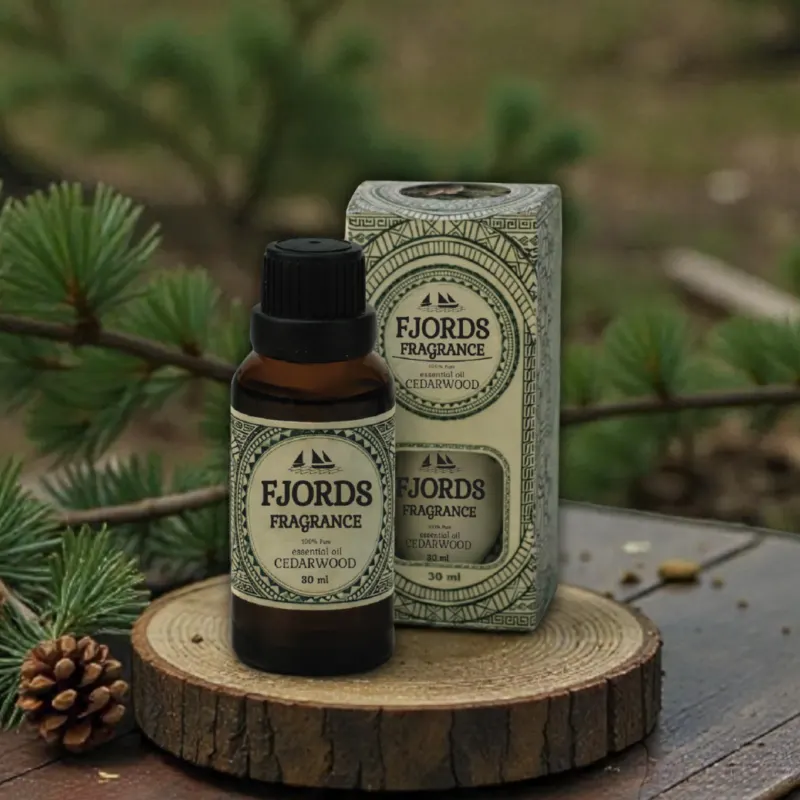
| Cedarwood | 2 drops cedarwood : 1 drop patchouli | Pure forest floor - dry timber and damp earth, deeply grounding. |
| Rose | 2 drops rose : 1 drop patchouli | Opulent and romantic - the great floral-earth pairing of classic perfumery. |
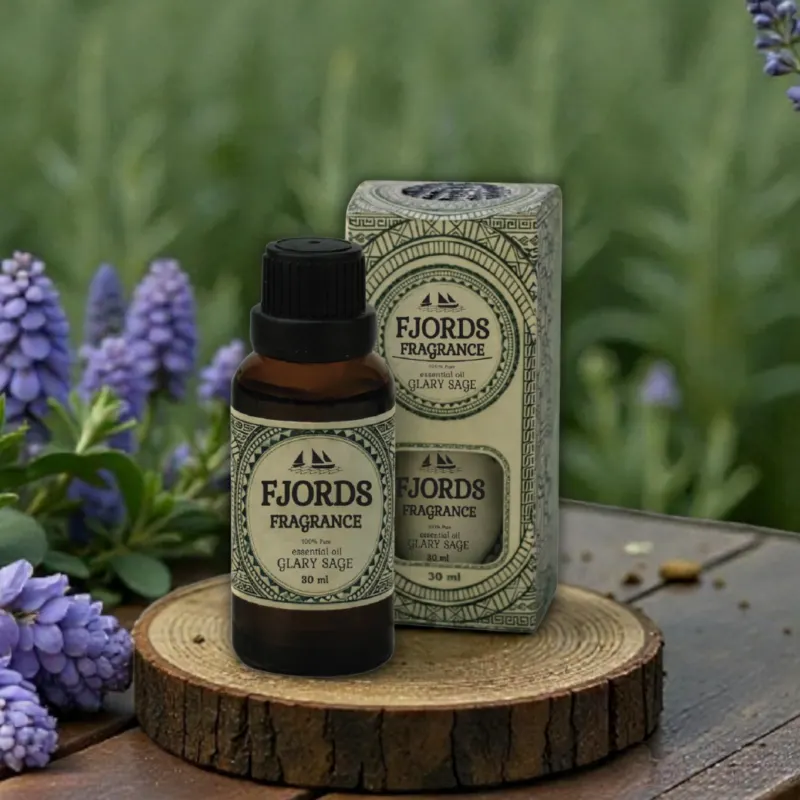
| Clary Sage | 2 drops clary sage : 1 drop patchouli | Herbal, dry and contemplative - an unhurried end-of-day steam. |
Key Characteristics
| Feature | Description |
|---|---|
| Aroma Profile | Deep, earthy and musky-sweet, with dark cocoa, dry wood and balsamic undertones that grow smoother with age. |
| Intensity | Strong - a persistent base note. Sauna dose: 2-3 drops per 500 ml of water. |
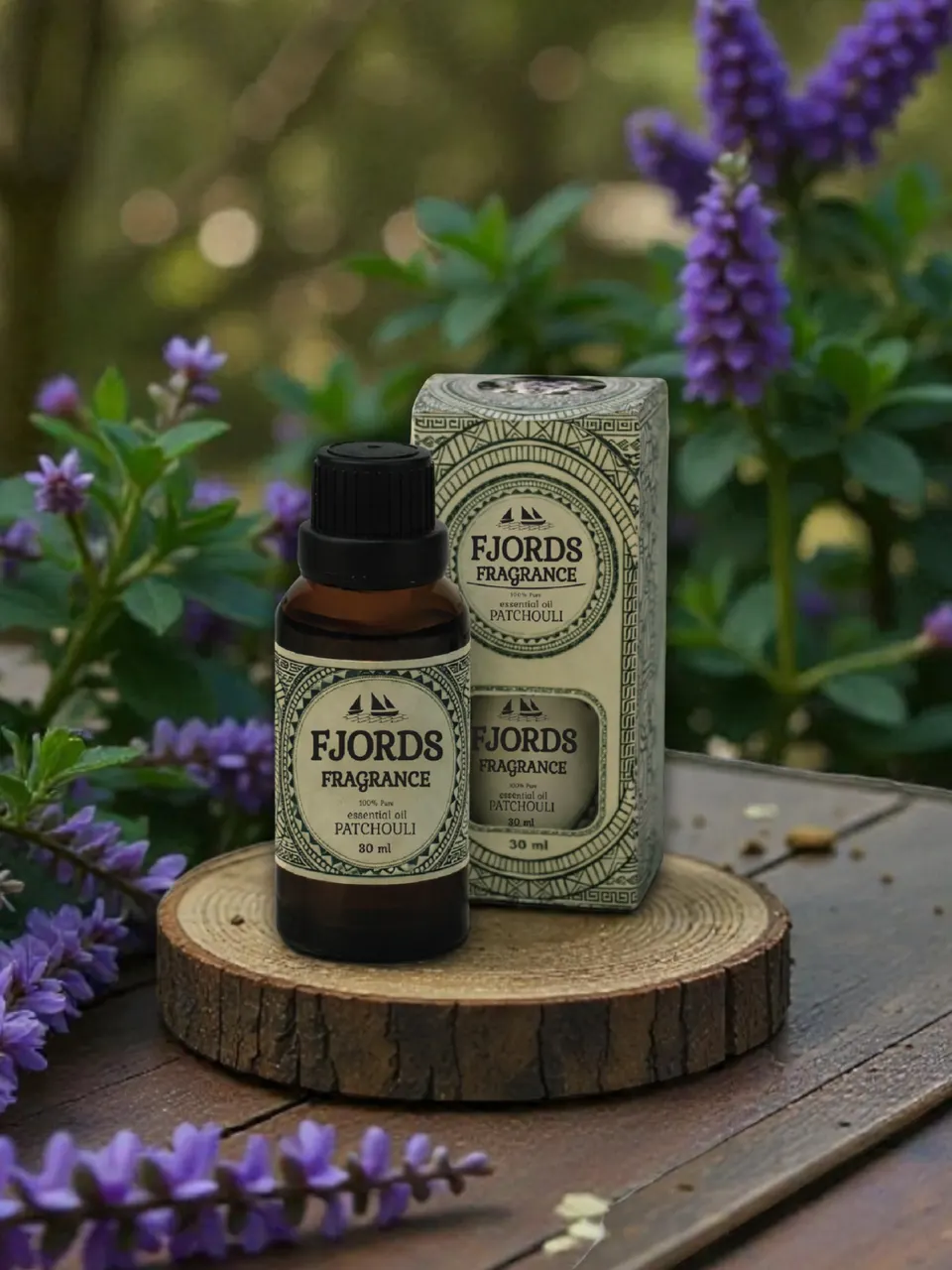
| Volume | 30 ml in UV-protective dark glass with a dropper. |
| Origin | 100% pure Pogostemon cablin, responsibly sourced from Indonesia or India. |
| Shelf Life | 4-5+ years - one of the few essential oils that improves with age. |
Storage and Quality
Store patchouli tightly capped in its dark glass bottle, in a cool place away from direct sunlight. Unlike citrus oils, which oxidise and fade, patchouli rewards patience: the sharp top notes soften and the base deepens year by year, so there is no rush to finish the bottle. Keep water out of the bottle - always drop the oil into the bucket, never dip anything into the oil. A gradual darkening of the amber colour is normal and, in patchouli's case, a good sign. Our oil is 100% pure and free from synthetic additives, distributed by FJORDS FRAGRANCE OU.
Safety Information
Patchouli has a long tradition of confident everyday use, but the same common-sense rules apply as with any essential oil.
- Aromatic and diluted topical use only. Never ingest patchouli oil, and never apply it undiluted to skin - keep topical use at around 2% in a carrier oil and patch test first.
- Never pour pure oil onto hot sauna stones. Always dilute in water first.
- Pets: Many essential oils can be harmful to animals, and cats are especially sensitive. Diffuse in ventilated spaces pets can leave, never apply oils to animals, and store bottles well out of reach of children and pets.
- Pregnancy, nursing and health conditions: Check with a qualified professional before regular use.
- A comforting scent, not a treatment. Patchouli is traditionally valued for grounding, restful evening rituals, but it does not treat any medical condition. For health questions, consult a specialist.
Frequently Asked Questions
Q: Why does patchouli essential oil improve with age?
A: Its aroma is built on heavy sesquiterpenes such as patchoulol, which evaporate and break down very slowly. Over the years the sharp, green top notes fade while the base grows smoother and sweeter - much like wine maturing. A well-stored bottle several years old is generally considered finer than a fresh one.
Q: How many drops of patchouli should I use in the sauna?
A: Patchouli is a strong oil, so 2-3 drops per 500 ml of water is the right range - start with 2 in a small sauna. Our sauna dosing guide covers the full system for all 24 oils.
Q: What does patchouli actually smell like?
A: Damp earth, dry aged wood and dark cocoa over a musky-sweet, balsamic base. Fresh oil has a slightly sharp, green edge that mellows with time. It is deep and persistent rather than fresh or airy - a scent that settles a room rather than brightens it.
Q: Is patchouli oil safe to put on skin?
A: Properly diluted to around 2% in a carrier oil, patchouli is generally well tolerated, but skin varies - patch test on the inner forearm first and avoid broken or irritated skin. For any specific skin concern, speak to a professional rather than relying on an essential oil.
Q: Is patchouli safe around cats and dogs?
A: Treat it with caution, as you should all essential oils. Cats in particular lack the ability to process many oil compounds. Diffuse only in ventilated rooms your pet can leave, never apply oil to an animal, and ask your vet before using any oils in a household with pets.
Q: Why is patchouli associated with the 1960s?
A: It was the era's favourite natural scent - inexpensive, long-lasting and worn neat or burned as incense. But the association is only the latest chapter: a century earlier, patchouli was the smell of authentic Kashmir shawls in European salons.
Q: What is a fixative, and why is patchouli called one?
A: A fixative slows the evaporation of lighter, more volatile scents, making a whole blend last longer. Patchouli's heavy molecules do this exceptionally well - a single drop can extend a citrus or floral blend by hours, which is why it appears in so many classic perfumes.
Q: Can I ingest patchouli oil?
A: No. Like every oil in our range, patchouli is for aromatic use and properly diluted topical use only. Keep it away from children, and if any amount is swallowed accidentally, contact a medical professional promptly.