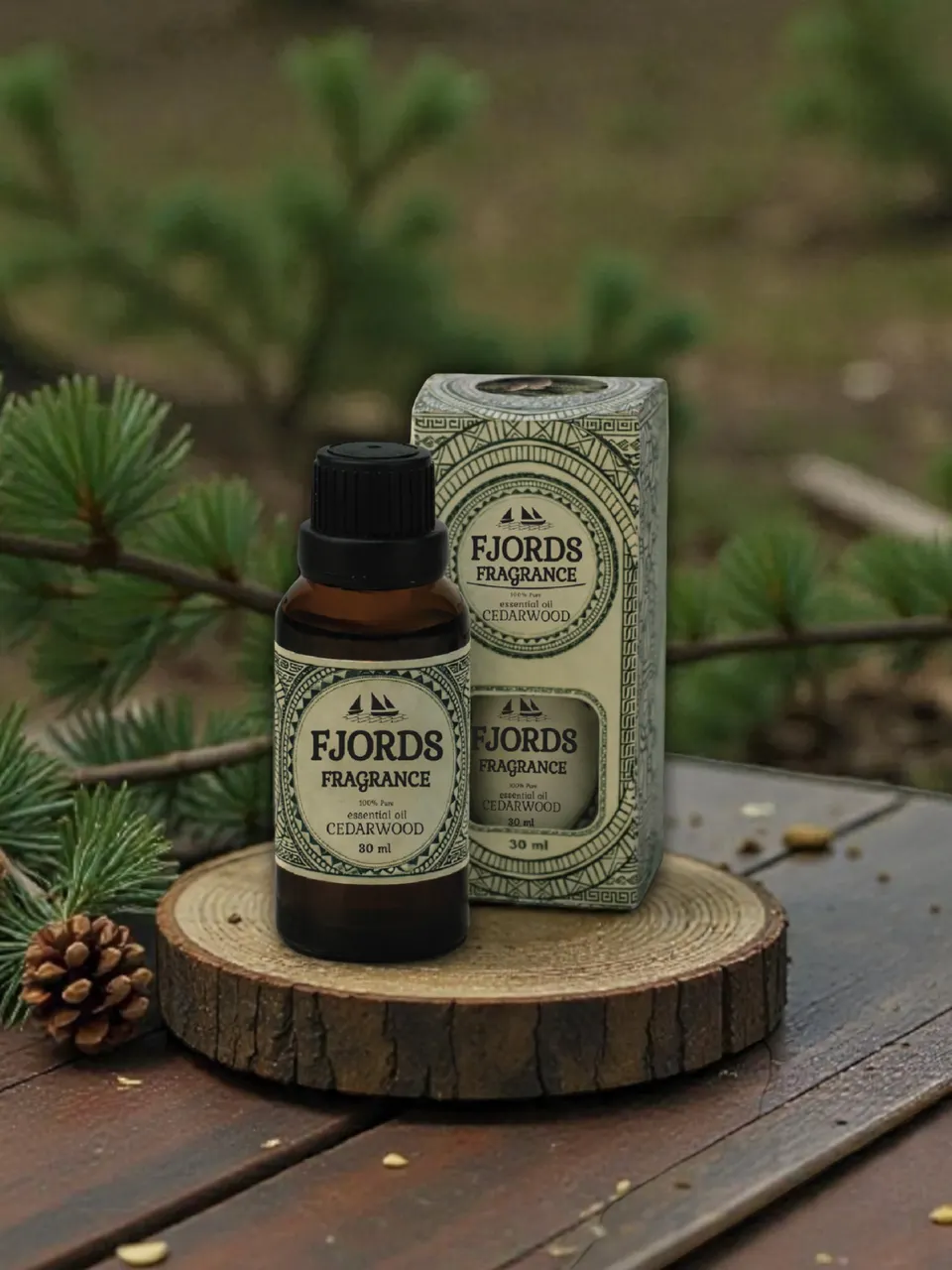
Description
Cedarwood is the sauna oil that smells like the sauna itself - warm timber, quiet air, and a long, slow exhale. Distilled from the heartwood of the Atlas cedar, it is one of the oldest aromatic materials people have ever worked with, and one of the easiest to love: gentle enough for a first-time user, deep enough to become the bottle you reach for on every winter evening. This entry covers where the oil comes from, how it actually smells, exactly how to dose it on the stones, and how it blends with the rest of the Fjords Fragrance range.
What It Is and Where It Comes From
Our cedarwood essential oil is steam-distilled from the wood of the Atlas cedar (Cedrus atlantica), a mountain conifer native to the Atlas ranges of North Africa. Unlike pine or spruce oils, which are drawn from needles and twigs, cedarwood oil lives in the heartwood itself - the same reason a cedar chest or a cedar-lined wardrobe keeps its scent for decades. Distillers typically work with chips and shavings, often recovered from timber milling so little of the slow-grown wood is wasted, and the long distillation yields a slightly viscous, amber-tinted oil rich in himachalenes and atlantone, the molecules behind cedar's warm, faintly sweet character.
One honest note before we go further: "cedarwood" is one of the most confusing labels in aromatherapy. Several unrelated trees are sold under the name. Virginia cedarwood is botanically a juniper, with a drier, sharper, pencil-shavings profile, and the "cedar" that panels many North American saunas is actually a cypress relative. Atlas cedar is a true cedar, and its oil is noticeably rounder, softer and sweeter than the juniper types. The tree's aromatic reputation is ancient: cedar oils appear in Egyptian cosmetics and embalming records, and cedar timber built temples and ships around the old Mediterranean precisely because that fragrant, resin-rich heartwood resists decay.
Scent Profile
Atlas cedarwood opens warm and dry-woody, then settles into a soft balsamic sweetness with a faint suggestion of smoke and honey underneath. There is very little sharpness in it - no citrus sparkle, no camphor bite - just a low, steady wood note that seems to make a room feel quieter. On the scent compass above it sits firmly in warm, woody territory: low brightness, medium richness, and very high persistence.
That persistence is worth planning around. Cedarwood is a textbook base note: it evaporates slowly, outlasts nearly everything you blend it with, and lingers pleasantly on sauna panelling and textiles long after the session ends. Where a light oil like lemon fades in minutes, cedarwood is still quietly present an hour later - a feature, not a flaw, once you dose it correctly.
In the Sauna
Cedarwood may be the most natural fit in our entire range for the hot room, because it deepens the scent the heated wood is already giving off rather than competing with it. It counts as a mild-strength oil in our sitewide dosing system, so the routine is simple:
- Fill your sauna bucket with about 500 ml of warm water.
- Add 3-5 drops of cedarwood oil - start with 3 if the scent is new to you.
- Stir well with the ladle so the oil disperses instead of pooling on the surface.
- Ladle small amounts over the hot stones in stages, letting each wave of steam settle before the next pour.
Never drip pure, undiluted oil onto hot stones. It can flash and scorch, and what you get is an acrid burnt note instead of forest warmth. The full reasoning behind our drop counts - and how they tighten for stronger oils - is in our essential oil dosage guide for sauna, and you can see where cedarwood sits among all twenty-four scents in the complete sauna scents guide.
A timing tip from long habit: cedarwood suits the last session of the day far better than a quick pre-work steam. Its slow, grounding character makes it a natural "final round" oil - the pour that tells everyone the evening is winding down. For a deeper ritual walkthrough, step-by-step variations and troubleshooting, see the full cedarwood essential oil guide.
At Home
Outside the sauna, cedarwood is the closest thing to bottled cabin atmosphere we sell, and it behaves well in every standard method:
- Diffuser: 3-5 drops in the water reservoir. Because the scent is persistent, shorter run times of 20-30 minutes are usually enough for a whole evening.
- Body and massage oil: dilute to about 2% - roughly 4 drops per 10 ml of a carrier oil such as jojoba or sweet almond. The result is a warm, subtle skin scent that pairs beautifully with a post-sauna cool-down.
- Linen and room spray: 10-15 drops stirred into 20 ml of high-proof unscented alcohol, then topped up to 100 ml with water in a spray bottle (shake before every use, since oil and water separate). A light mist gives curtains and bedding a soft woody backdrop.
- Wardrobe trick: a drop or two on a small block of untreated wood in a drawer refreshes it for weeks - the same tradition that made cedar chests a household standard, long valued as a moth deterrent.
Blending Guide
Cedarwood is the friendliest base note in the range: it anchors bright oils without swallowing them and adds body to anything thin. Ratios below are given as cedarwood : partner, counted in drops within the same 500 ml sauna bucket or diffuser fill.
| Partner oil | Suggested ratio | The mood it makes |
|---|---|---|
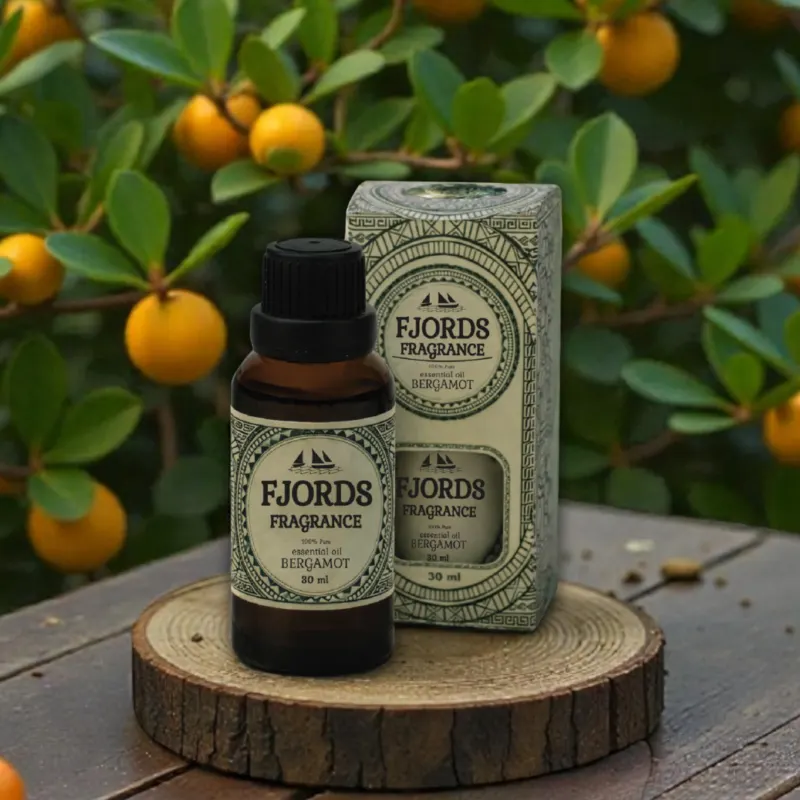
| Bergamot | 2 : 3 | Sunlit forest - bright and optimistic on top, softly grounded underneath. |
| Lavender | 1 : 1 | The classic evening wind-down pour - calm, familiar, effortlessly balanced. |
| Pine | 1 : 1 | Nordic forest floor - green needles over warm heartwood, very authentic in a spruce-panelled sauna. |
| Lemon | 2 : 3 | A clean morning workshop - fresh, awake, with the wood keeping the citrus from feeling thin. |
| Patchouli | 2 : 1 | Earthy and incense-like - slow, deep and meditative; keep patchouli in the minority. |
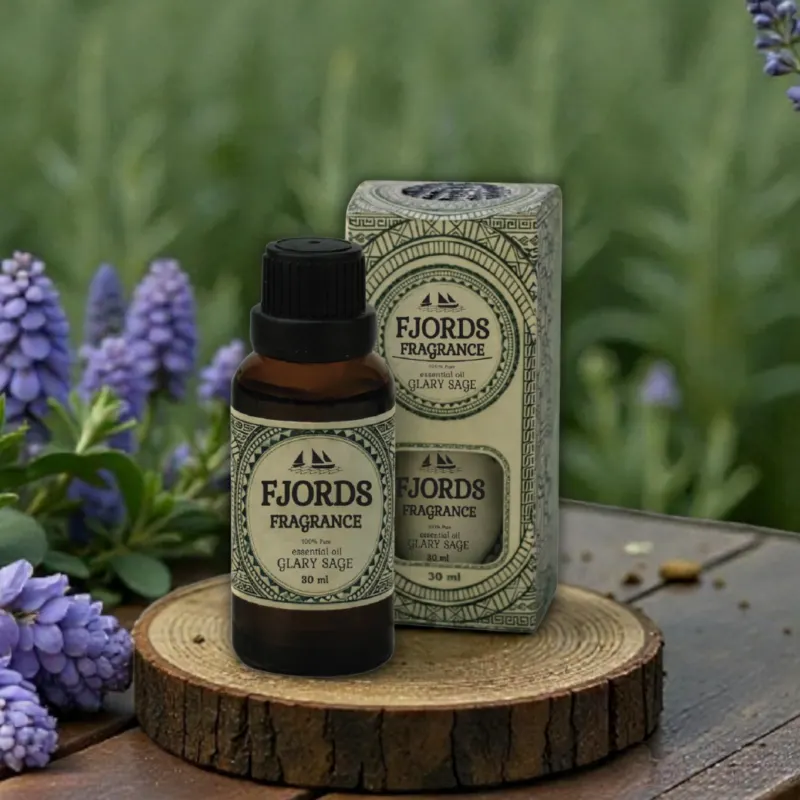
| Clary Sage | 2 : 1 | Soft herbal warmth - mellow, contemplative, quietly complex. |
Key Characteristics
| Feature | Description |
|---|---|
| Aroma Profile | Warm, dry-woody and softly balsamic, with faint honeyed-smoke undertones. A long-lasting base note. |
| Intensity | Mild to medium - gentle in the moment, but persistent and slow-evaporating. |
| Volume | 30 ml in UV-protective dark glass with a dropper. |
| Origin | Atlas cedar (Cedrus atlantica), steam-distilled from responsibly sourced timber. |
| Shelf Life | 3-4 years unopened; best within 2 years once in regular use. |
Storage and Quality
Cedarwood is one of the more stable oils in the range - its heavy sesquiterpene molecules oxidise far more slowly than citrus oils do. Even so, treat it like any essential oil: keep the bottle tightly capped in a cool, dark place, and do not store it inside the sauna itself, where heat cycles will age it quickly. Over years the oil may thicken slightly and deepen in colour; that is normal for wood oils and usually comes with a rounder, softer scent rather than a spoiled one. If it ever smells flat, sour or varnish-like, it is past its best.
Our cedarwood is 100% pure, single-botanical oil with no synthetic additives, carriers or extenders - what the still produced is what goes in the bottle, bottled for Fjords Fragrance OU.
Safety Information
Cedarwood is generally regarded as one of the gentler essential oils, but "gentle" never means "rule-free". A comforting scent is not a treatment, and for any health question you should consult a qualified specialist. The essentials:
- Never ingest. This applies to every essential oil we sell, without exception.
- Dilute for skin. Always mix with a carrier oil (around 2%) before topical use, and patch-test a small area first. Any essential oil can irritate sensitive skin.
- Never pour pure oil on hot stones. Always disperse it in a full bucket of water first - undiluted oil on stones is a fire and fume hazard.
- Pets: many essential oils, cedarwood included, can be harmful to animals - cats are especially vulnerable because they metabolise these compounds poorly. Keep bottles out of reach, never apply oils to animals, and give pets a way to leave a scented room.
- Children, pregnancy, medical conditions: keep oils away from young children, and if you are pregnant, nursing or managing a health condition, check with a professional before regular use.
Frequently Asked Questions
Q: What does cedarwood essential oil smell like?
A: Warm, dry and woody with a soft balsamic sweetness and a faint hint of smoke - close to the scent of a sun-warmed timber cabin or a freshly opened cedar chest, and noticeably rounder than the sharp pencil-shaving scent of juniper-based "cedar" oils.
Q: How many drops should I use in the sauna?
A: Cedarwood is a mild oil, so use 3-5 drops per 500 ml of water in your sauna bucket, stirred well before ladling onto the stones. Start at 3 drops and adjust to taste - our dosage guide explains the full system.
Q: Can I pour it directly onto the hot stones?
A: No. Undiluted oil can scorch or ignite on contact with hot stones and produces a harsh burnt smell. Always dilute the drops in a bucket of water first and pour gradually.
Q: Is this the same cedar my sauna is built from?
A: Usually not - most Nordic saunas are panelled in spruce or aspen, and North American "cedar" panelling is typically a cypress relative rather than a true cedar. Atlas cedarwood oil comes from a true cedar, which is exactly why it harmonises so well with heated sauna wood without simply repeating it.
Q: Is cedarwood good for sleep or stress?
A: Cedarwood has been traditionally valued as a calming, grounding evening scent, and many people simply find it easier to unwind with it in the air. It is a comforting scent, not a treatment - for sleep or health concerns, please consult a specialist.
Q: Can I use cedarwood oil on my skin?
A: Yes, diluted - mix about 4 drops into 10 ml of a carrier oil such as jojoba or sweet almond (roughly a 2% dilution) and patch-test first. Never apply essential oils neat, and never ingest them.
Q: Is cedarwood safe around pets?
A: Treat it with the same caution as any essential oil. Cats in particular process these compounds poorly, so keep bottles sealed and out of reach, avoid diffusing in a closed room a pet cannot leave, and never apply oil to an animal. Ask your vet if you are unsure.
Q: How long does a bottle keep?
A: Stored cool, dark and tightly capped, cedarwood keeps for 3-4 years - longer than most citrus oils. Slight thickening and a deeper colour over time are normal for wood oils; a flat or varnish-like smell means it is time to replace it.