Description
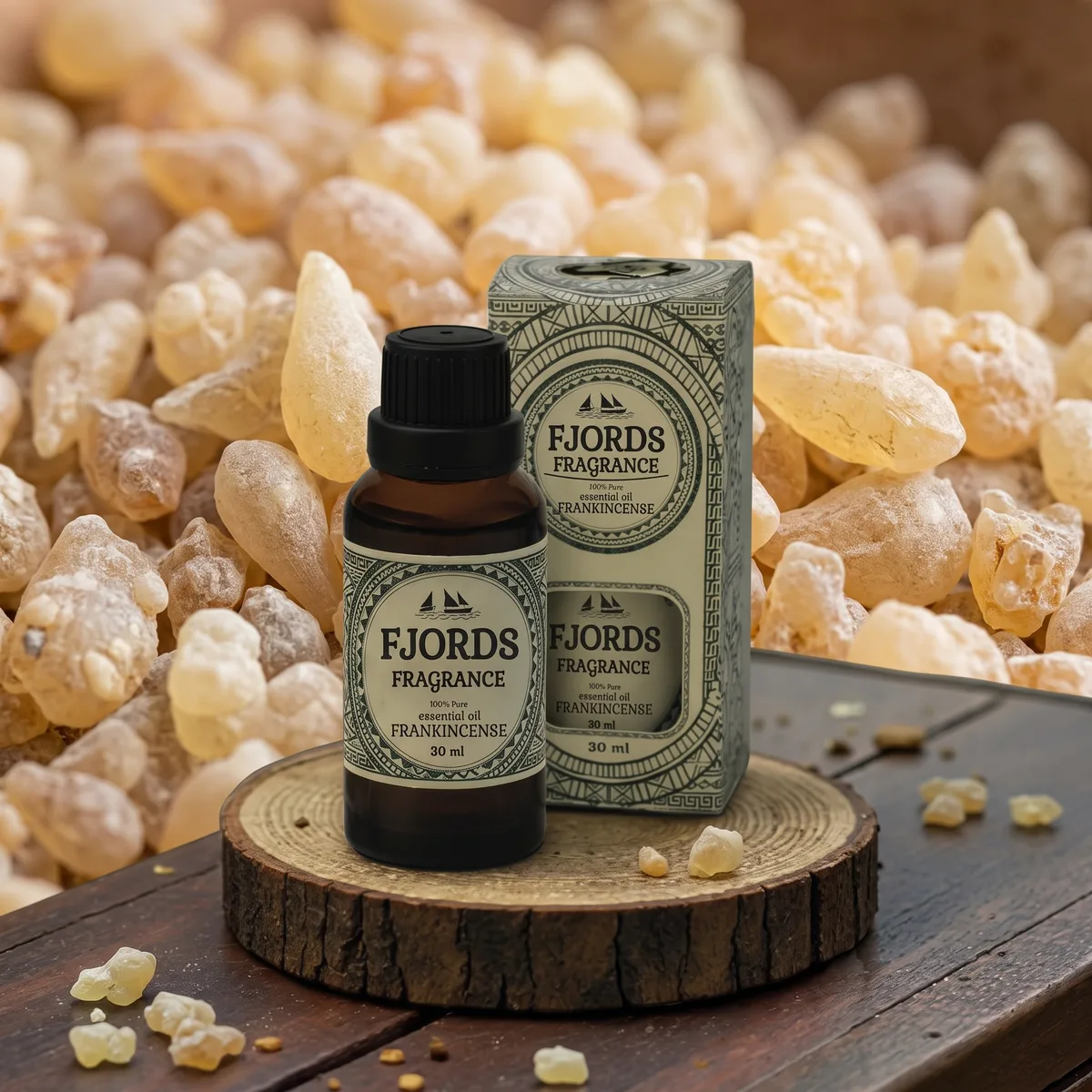
Frankincense essential oil is steam-distilled from the hardened resin of Boswellia trees, small, stubborn, drought-adapted trees that grow in the dry country of Oman, Somalia, Ethiopia and parts of India. Harvesters cut the bark, the tree weeps, and the sap hardens into pale golden tears over a few weeks. Those tears are the raw material, collected by hand and then distilled. It is one of the oldest traded aromatics in the world, older than any of the northern oils in this range by several thousand years.
Almost every culture that could get frankincense burned it: Egyptian temples, the incense routes of Arabia, churches from Ethiopia to Europe. That history is the reason the scent carries a sense of ceremony even for people with no religious feeling at all. It is worth being precise about one thing, though. The smoke of burning resin and the steam-distilled oil are not the same material. Some of the compounds people associate with incense smoke, incensole acetate in particular, sit in the resin rather than in the distilled oil. The oil is the aromatic distillate, and a beautiful one; it is not a substitute for burning resin, and it is not a medicine.
Chemically, the oil is led by alpha-pinene, limonene and, in Boswellia carterii, octyl acetate. That is why frankincense smells simultaneously fresh and old: a citrus-pine brightness sitting on top of a warm, dry, resinous base.
Scent Profile
Frankincense opens with a surprising lift - lemony, slightly piney, almost green. Underneath is the part everyone recognises: warm, dry, balsamic resin with a faint sweetness and a trace of something like old wood and paper. The dry-down is long and quiet. It does not announce itself the way eucalyptus does; it changes the character of a room without ever being the loudest thing in it.
In blends it behaves like a fixative, holding lighter oils in place and lending them depth. That makes it one of the most useful bottles on a shelf even when it is not the star.
In the Sauna
Frankincense is a mild sauna oil with a long, slow presence:
- 1. Prepare the water first. About 500 ml of warm water.
- 2. Add 3-5 drops of frankincense oil. Its quietness is the point; resist the urge to double it because you cannot smell it in the bottle across the room.
- 3. Stir well so the droplets disperse rather than floating.
- 4. Ladle small amounts over hot stones. The scent builds over several pours rather than arriving all at once.
- 5. Repeat sparingly. One scented pour every 10-15 minutes is enough; frankincense rewards patience more than quantity.
Never pour undiluted oil onto the stones. It is flammable, it can flash on a hot heater, and burnt resin oil smells nothing like incense. Dilute in water and air the room between sessions. See the dosage guide for the reasoning, and the complete sauna scents guide for how it compares with the rest of the range.
At Home
- Diffuser. 3-5 drops. Frankincense is the oil people reach for when they want a room to feel calm and considered rather than fragranced.
- Before quiet work. Many people use it as a scent cue for reading, meditation or the end of the day. That is habit and association doing the work, which is honest enough.
- Body oil. About 2 percent in a carrier, roughly 12 drops per 30 ml. It is one of the better-tolerated oils on skin, though the usual dilution rules still apply. The carrier oils guide covers the bases.
- Fixing a blend. A drop or two added to a citrus or floral blend makes it last noticeably longer in a diffuser.
Blending Guide
Frankincense makes other oils sound deeper. Ratios are by drops.
| Partner oil | Suggested ratio | The mood it makes |
|---|---|---|
| Cedarwood | 1 : 1 | Temple and timber - dry resin over warm wood, the most contemplative pour in the range. |
| Lavender | 1 : 2 frankincense to lavender | An evening blend with weight, where the resin keeps the lavender from smelling like laundry. |
| Bergamot | 1 : 1 | Bright citrus resting on old resin, elegant and slightly melancholy. |
| Patchouli | 2 : 1 frankincense to patchouli | Earth and incense together, dark and enveloping for a winter session. |
| Spruce | 1 : 2 frankincense to spruce | The northern version of incense: green forest air with a resinous floor underneath. |
All partners come from our own range.
Key Characteristics
| Feature | Description |
|---|---|
| Aroma Profile | Warm, dry resin with a lemony-pine lift on top and a long, quiet balsamic finish. |
| Intensity | Mild but persistent - subtle in the moment, noticeable an hour later. |
| Composition | 100% pure Boswellia resin essential oil, steam-distilled from hand-collected resin tears. |
| Volume | 30 ml in UV-protective dark glass with a dropper. |
| Origin | Resin from the dry regions of the Arabian peninsula and the Horn of Africa. |
| Shelf Life | 4-5 years unopened; resin oils age more gracefully than needle oils and can even improve in the first year. |
Storage & Quality
Frankincense keeps better than the conifers, but the rules do not change: dark glass, cap on, cool shelf, away from the window. Its pinene content still oxidises, and an oxidised bottle loses the bright top and keeps only the dusty base.
There is a sourcing question with this oil that we would rather raise than hide. Boswellia populations in parts of the Horn of Africa are under real pressure from over-tapping, drought and land use, and demand has risen faster than the trees can carry. A responsible frankincense supply chain means fewer cuts per tree and rest years, which costs money. If you ever see frankincense sold as cheaply as a needle oil, that is the corner being cut.
Safety Information
- Never take it internally. Resin chewing gum exists in some cultures; essential oil is not that, and it is not food.
- Dilute for skin. Around 2 percent in a carrier for adults. Frankincense is comparatively gentle, but comparatively is not the same as freely.
- No medical claims. Frankincense has a long traditional and religious history and a genuinely interesting research literature around the resin, mostly not about the distilled oil. It is a scent, not a treatment for anything, and we will not pretend otherwise.
- Pets. Not safe around cats, and scented steam is hard on birds. Keep animals out of the sauna.
- Pregnancy, children, existing conditions. Ask a qualified professional who knows your history before adding any scent to hot steam.
- Flammable. Keep away from open flame and never pour neat onto stones.
Frequently Asked Questions
Q: Is frankincense oil the same as burning frankincense resin?
A: No. Burning resin produces smoke with its own chemistry; the oil is a steam distillate of the same resin. They smell related, and the oil is cleaner and easier to control, but they are different materials.
Q: How many drops go in a sauna bucket?
A: 3-5 drops in about 500 ml of water. The scent builds across several pours, so give it time before adding more.
Q: Which Boswellia species is it?
A: Ours is a Boswellia resin distillate; carterii and sacra are the classic aromatic sources and smell very close to one another. Serrata, the Indian species, is drier and sharper.
Q: Why is frankincense expensive?
A: Hand tapping, slow resin collection, low yield in distillation and growing pressure on the trees. What it costs is the honest consequence of all four.
Q: Does frankincense help you relax?
A: Many people find it calming, and scent and memory are closely linked, so that effect is real for them. It is a comforting scent rather than a treatment, and we make no health claim for it.
Q: Can I use it on skin?
A: Diluted to about 2 percent in a carrier oil, it is among the better tolerated oils in the range. Patch test first, and stop if your skin objects.
Q: What does it blend with?
A: Woods, citrus and florals all work, and frankincense makes each of them last longer. The table above gives five combinations from our own shelf.
Q: Does it lose its smell over time?
A: The bright top fades first, over a year or two, while the resinous base persists. Stored properly, a bottle stays worth using for four to five years.