Description
Sandalwood essential oil is distilled from the heartwood of Santalum album, a small hemiparasitic tree that spends its whole life drawing part of its nourishment from the roots of its neighbours. The aromatic wood only develops properly after fifteen years and rewards patience for thirty, which is the single fact that explains everything else about this oil: its cost, its scarcity, and the pressure the species has been under for a century.
Sandalwood has been burned, carved and distilled in India for at least two thousand years, and it remains central to temple ritual, funeral rites and traditional perfumery there. In Europe it arrived as a perfumer's base note and never left. None of that history makes it a medicine, and the oil treats and cures nothing; what it does is give a room a depth that almost nothing else can.
The chemistry is unusually simple for something that smells so complex: alpha-santalol and beta-santalol together make up the great majority of a good oil, and they are heavy, slow-evaporating molecules. That is why sandalwood clings to skin and fabric for hours and why it behaves as a base rather than a top note.
A word on species and sourcing, because it matters more here than with any other oil in this range. Indian Santalum album is protected and its trade is regulated; responsible supply today means plantation-grown material rather than wild harvest. Australian sandalwood, Santalum spicatum, is a different and legitimate oil, drier and less creamy, and it is not a substitute so much as a relative. If a sandalwood costs about what a conifer oil costs, it is neither.
Scent Profile
Sandalwood opens quietly: soft, warm and slightly milky, with none of the sharpness of the conifer woods. The heart is creamy, sweet and rounded, with a faint balsamic edge that keeps it from being bland. The dry-down goes on and on, gentler by the hour, and is still there on a scarf the next day.
It is the softest wood in our range. Cedarwood is drier and more timber-like, patchouli is earthier and darker. Sandalwood is the one people describe as comforting rather than atmospheric.
In the Sauna
Sandalwood is a mild oil and an honest exception to how sauna scents usually work. Its molecules are heavy and slow, so it does not leap out of the bucket the way a citrus or a mint does:
- 1. Prepare the water first. About 500 ml of warm water.
- 2. Add 3-5 drops of sandalwood oil. Expect a quiet, low presence rather than a wave of scent.
- 3. Stir well. Heavier oils sit on the surface more stubbornly than light ones, so agitate properly before each pour.
- 4. Ladle small amounts over hot stones. The scent builds slowly across a session instead of arriving at once.
- 5. Consider blending it. Sandalwood earns its keep in the sauna mostly as a base under a brighter oil, holding the blend together as the top notes burn off.
Never pour undiluted oil onto the stones. Neat essential oil is flammable and can flash on a hot heater. Dilute in water first. The dosage guide explains the bands, and the complete sauna scents guide shows where the woods sit against everything else.
At Home
- Diffuser. 3-5 drops. This is where sandalwood is at its best: a slow room scent that lasts for hours after the diffuser stops.
- Quiet evenings. It has been the scent of contemplation in several cultures for a very long time, and it works that way in a living room as readily as in a temple.
- Body oil. About 2 percent in a carrier, roughly 12 drops per 30 ml. Sandalwood is among the gentlest oils on skin, and it lasts unusually well. See the carrier oils guide for the base.
- Fixing a blend. A drop or two anchors citrus and florals that would otherwise disappear within the hour.
Blending Guide
Sandalwood is the floor other oils stand on. Ratios are by drops.
| Partner oil | Suggested ratio | The mood it makes |
|---|---|---|
| Bergamot | 1 : 2 sandalwood to bergamot | The classic perfumery pairing - bright citrus resting on cream, elegant and easy to wear. |
| Rose | 1 : 1 | Rich, old-fashioned and quietly luxurious. A small amount of each goes a long way. |
| Cedarwood | 1 : 1 | Two woods with different textures - dry cedar timber over soft cream. |
| Lavender | 1 : 2 sandalwood to lavender | An evening blend with a floor under it, so the lavender does not vanish in ten minutes. |
| Patchouli | 2 : 1 sandalwood to patchouli | Deep, earthy and enveloping, the darkest room scent in the range. |
All partners come from our own range.
Key Characteristics
| Feature | Description |
|---|---|
| Aroma Profile | Soft, creamy and milky-sweet wood with a faint balsamic edge and a very long finish. |
| Intensity | Mild but extremely persistent - quiet in the moment, present for hours. |
| Composition | 100% pure Santalum album heartwood essential oil, from regulated plantation material. |
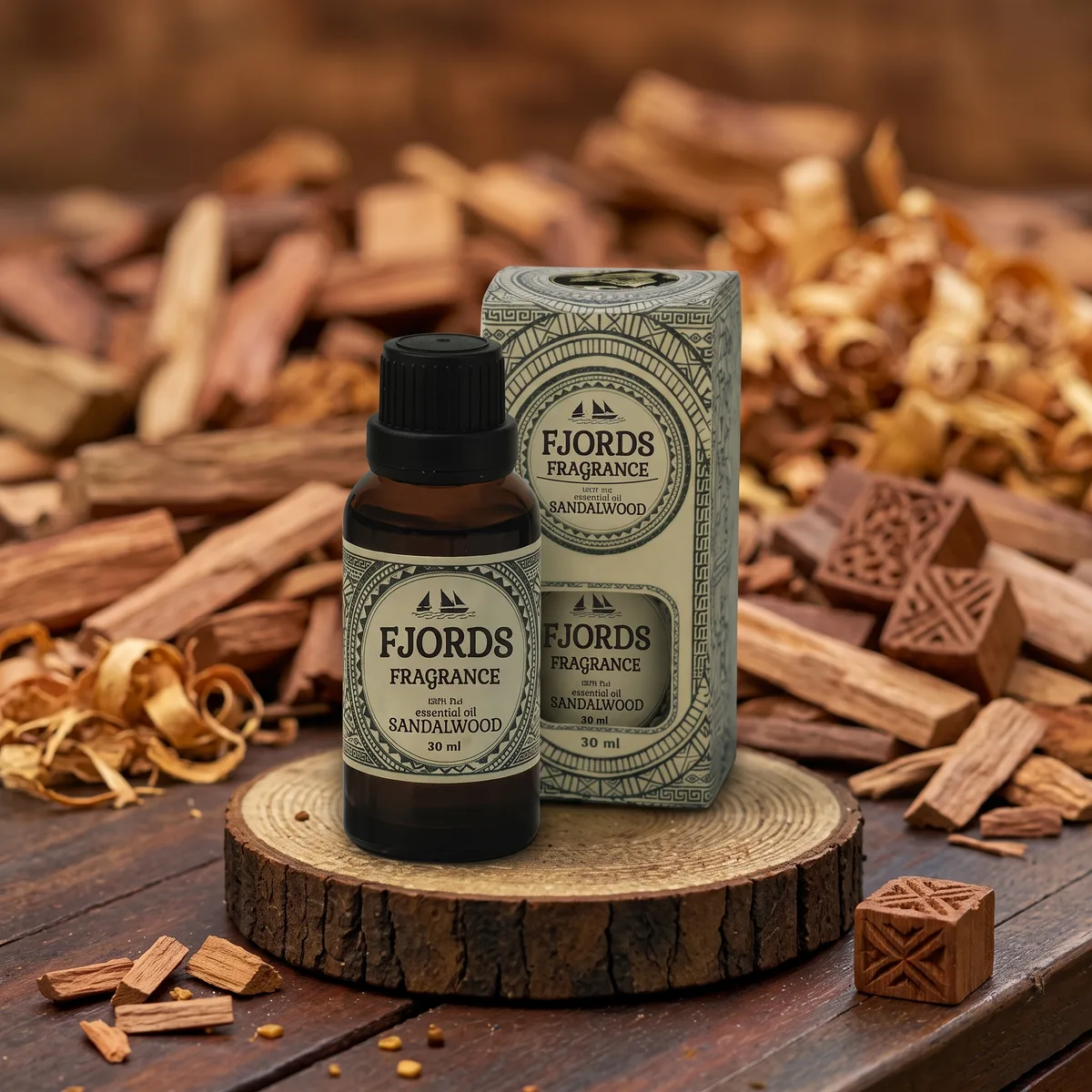
| Volume | 30 ml in UV-protective dark glass with a dropper. |
| Origin | Plantation-grown sandalwood; the species and country of origin are stated on every batch. |
| Shelf Life | 5 years or more - sandalwood is one of the few oils that genuinely improves with age. |
Storage & Quality
Sandalwood is the least fragile oil we sell. The santalols are heavy and stable, and a well-kept bottle will be rounder in five years than it is today. The usual rules still apply - closed, cool, out of the light - but you are protecting the investment rather than racing a clock.
Adulteration is the real risk. Sandalwood is expensive enough that substitution is routine across the market: Australian sandalwood sold as Indian, amyris sold as sandalwood, or a genuine oil stretched with synthetic santalol. A real Santalum album is creamy and soft with no sharpness at all, and it does not smell woody in the way a cedar does. Certificates of analysis exist for exactly this reason, and a serious supplier will show you one.
Safety Information
- Never take it internally. No oil in this range is for ingestion.
- Dilute for skin. About 2 percent in a carrier for adults. Sandalwood is among the best tolerated oils, which is a reason to use it properly rather than a reason to skip dilution.
- Pets. Not safe around cats, whose livers handle essential oils poorly, and scented steam is hard on birds. Keep animals out of a scented sauna.
- Pregnancy, children and existing conditions. A scent is not a treatment. Put health questions to a qualified professional who knows your history.
- Sourcing. If sustainability matters to you, ask any supplier which species their oil is and where the wood was grown. We would rather you asked us that than assumed.
- Flammable. Keep away from open flame; never neat onto stones.
Frequently Asked Questions
Q: Why is sandalwood so expensive?
A: The heartwood takes fifteen to thirty years to develop, the species is protected and its trade regulated, and yields are low. There is no honest shortcut, which is why the market is full of dishonest ones.
Q: Indian or Australian sandalwood - what is the difference?
A: Santalum album, the Indian species, is creamy, sweet and soft. Santalum spicatum, the Australian one, is drier and greener with less santalol. Both are real sandalwoods; they are not interchangeable, and the label should say which you have.
Q: How many drops go in a sauna bucket?
A: 3-5 drops in about 500 ml of water, though sandalwood works better as the base of a blend than as a solo sauna scent.
Q: Why can I barely smell it in the steam?
A: Because its molecules are heavy and slow to evaporate. That is the same property that makes it last for hours on skin and in a room after a diffuser stops.
Q: Does sandalwood oil go off?
A: Less than almost anything else. Stored properly it lasts five years and often improves, which is unusual among essential oils.
Q: Is it sustainable?
A: It can be. Wild Indian sandalwood was heavily over-harvested and is regulated as a result; plantation material is the responsible route, and that is what a serious supplier will document.
Q: What does sandalwood blend with?
A: Almost everything, because it sits underneath rather than competing. Citrus, rose, other woods and lavender are the classic partners; the table above gives ratios from our own range.
Q: Can I use it on skin every day?
A: Diluted to about 2 percent, many people do. Patch test first, and stop if your skin objects, as with any oil.