Description
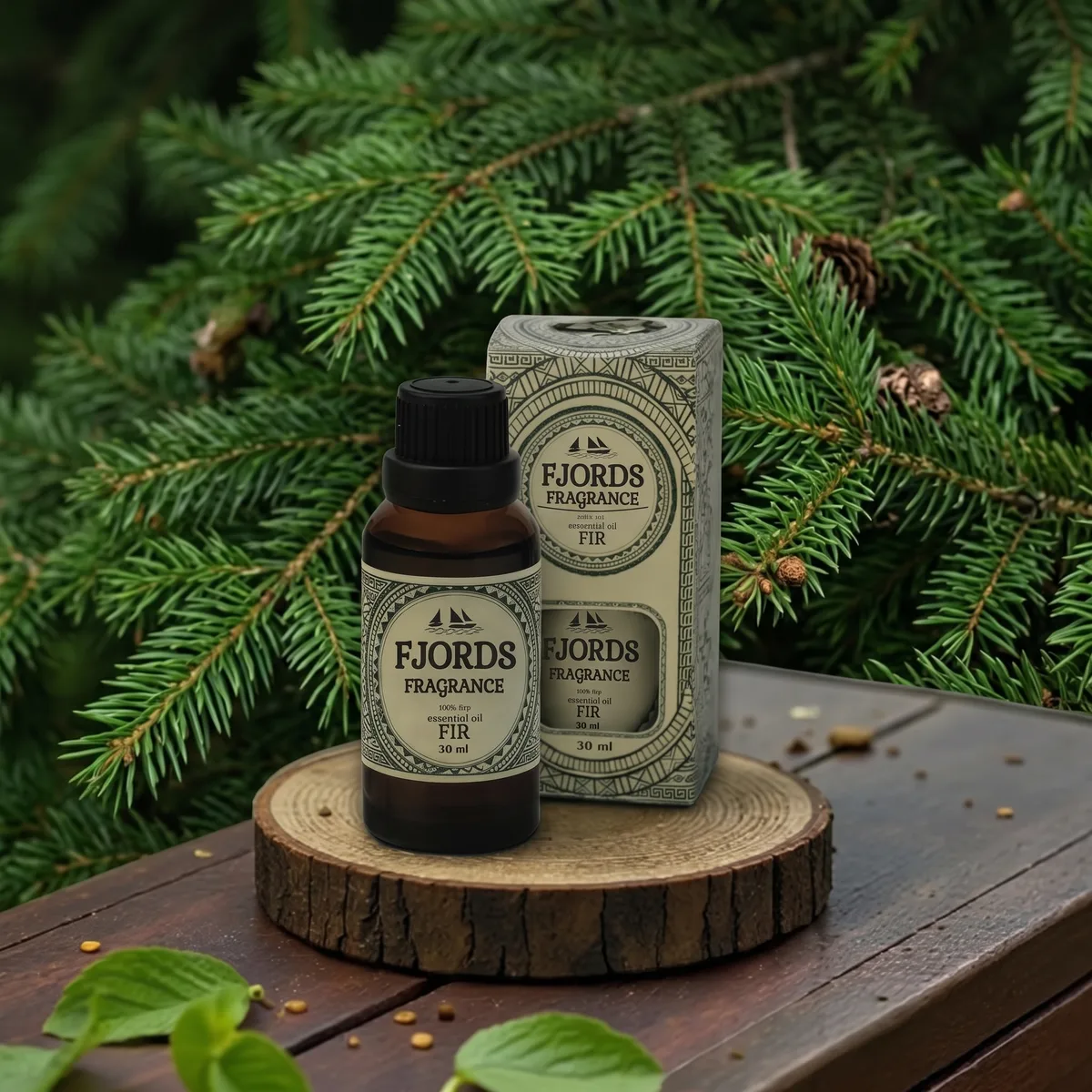
Fir essential oil is steam-distilled from the needles and young twigs of the silver fir family, most often Abies sibirica, the Siberian fir whose forests run from the Urals to the edge of the taiga. It is the scent almost everyone in Northern Europe recognises before they can name it: the smell of a cut Christmas tree in a warm room, of a branch snapped between your fingers on a winter walk. Distillers work with fresh needle material, much of it a by-product of forestry, and steam lifts the aromatics out into a clear, pale oil that carries the tree with surprising honesty.
Fir has a long domestic history in the North rather than a grand one. Branches were laid on floors for winter feasts, needles went into bath water, and fir resin turned up in the same household salves as spruce and pine. None of that makes the oil a medicine, and it does not treat or cure anything, but it explains why the scent reads as clean, seasonal and safe to so many people. In a sauna it behaves the same way: familiar, uncomplicated, easy to love on the first pour.
Chemically, fir leans on bornyl acetate, camphene, alpha-pinene and limonene. The bornyl acetate is the part that matters to your nose. It is the compound behind that soft, sweet, almost creamy edge that separates fir from the sharper, drier pines, and it is why fir blends so willingly with citrus and lavender rather than fighting them.
Scent Profile
Fir opens bright and green, with a clean coniferous lift that feels cold even in a hot room. The heart is where its character sits: sweet, balsamic, gently resinous, with none of the turpentine bite that pine can carry when it is young. The dry-down is soft and woody, fading politely rather than clinging to the towels.
Against its neighbours in our range, fir is the friendliest conifer. Pine is drier and more bracing, spruce is greener and crisper, cedarwood is warmer and heavier. Fir sits in the middle: forest, but forest at rest.
In the Sauna
Fir is a mild sauna oil, and the method is the plain Nordic one:
- 1. Prepare the water first. Fill your sauna bucket or ladle jug with about 500 ml of warm water.
- 2. Add 3-5 drops of fir oil. Start at 3 the first time; fir is forgiving, but the room is smaller than you think.
- 3. Stir well. Essential oils do not dissolve in water, so agitate the bucket just before each pour so the droplets are carried evenly.
- 4. Ladle small amounts over hot stones. Pour gradually rather than all at once, and let the steam do the work.
- 5. Repeat sparingly. One scented pour every 10-15 minutes is plenty. More oil does not mean more forest, it just means a heavier room.
Never pour undiluted oil straight onto the stones. Pure essential oil is flammable, it can flash on contact with a hot heater, and scorched oil residue smells acrid rather than fresh. Always dilute in water first, and air the sauna between sessions. The reasoning behind these amounts across the whole range is set out in our guide to essential oil dosage for sauna, and the complete sauna scents guide maps fir against every other scent we sell.
At Home
Fir earns its place outside the sauna too, particularly between November and February:
- Diffuser. 3-5 drops in a standard room diffuser. Fir is one of the few conifers that reads as cheerful rather than austere in a living room.
- Winter room spray. A few drops in water with a splash of neutral alcohol as a dispersant, shaken before each use, for hallways and coat cupboards.
- Body oil. Diluted to about 2 percent in a carrier oil, roughly 12 drops per 30 ml, for shoulders after cold weather. See our carrier oils guide for which base to choose.
- Firewood and linen. A drop on a wooden peg or an unfinished wood block in a wardrobe; never on fabric directly, where conifer oils can mark.
Blending Guide
Fir is a generous blender because its sweetness rounds off other oils rather than competing with them. Ratios below are by drops.
| Partner oil | Suggested ratio | The mood it makes |
|---|---|---|
| Spruce | 1 : 1 | A whole forest rather than one tree - crisp green over soft balsamic, the most Nordic pour in the range. |
| Lemon | 2 : 1 fir to lemon | Frosted morning air. The citrus lifts the fir without turning it into cleaning fluid. |
| Lavender | 1 : 1 | Evening woodland. The floral hush takes the last edge off a long week. |
| Cedarwood | 2 : 1 fir to cedarwood | Deep timber and warm needles - a heavier, grounding room for winter. |
| Bergamot | 3 : 1 fir to bergamot | Bright and quietly elegant, good for a morning sauna when you still have a day ahead. |
Every partner above comes from our own range, so the ratios match the bottles already on your shelf.
Key Characteristics
| Feature | Description |
|---|---|
| Aroma Profile | Fresh green needles over a sweet, balsamic heart - the familiar scent of a cut fir in a warm room, softer than pine. |
| Intensity | Mild to medium - clearly present in steam, gentle enough for daily use and easy to blend. |
| Composition | 100% pure Abies sibirica essential oil, steam-distilled from needles and young twigs. No synthetic additives. |
| Volume | 30 ml in UV-protective dark glass with a dropper. |
| Origin | Northern conifer forests, from needle material harvested as part of managed forestry. |
| Shelf Life | 3-4 years unopened; best used within 12-24 months after opening. |
Storage & Quality
Conifer oils are rich in monoterpenes, and monoterpenes oxidise. Oxidised fir does two things: it loses the sweet top that made you buy it, and it becomes more likely to irritate skin. Both are avoidable. Keep the bottle closed, upright, cool and out of sunlight, and do not decant it into a part-filled container that is mostly air.
A good fir oil looks like water, not syrup, and smells like the tree rather than like a pine-scented cleaner. If yours has turned sharp, flat or vaguely plastic, it has aged past its useful life. That is a signal to retire it to the cleaning cupboard, not to use more of it in the sauna.
Safety Information
- Never take it internally. No essential oil in our range is for ingestion, fir included.
- Dilute before skin contact. About 2 percent in a carrier oil for adults, and patch test on a small area first if your skin is reactive.
- Oxidised conifer oil sensitises. Old or badly stored fir is a common cause of skin reactions, which is the practical reason to store it properly and replace it.
- Pets. Essential oils are not safe around cats, whose livers process them poorly, and strongly scented steam is hard on birds. Keep animals out of a scented sauna and diffuse only in ventilated rooms they can leave.
- Pregnancy, children and existing conditions. This is a scent, not a treatment. If you are pregnant, breastfeeding, sharing the room with young children, or managing a respiratory or skin condition, put the question to a qualified professional who knows your history rather than to a shop.
- Keep away from open flame. Essential oils are flammable, which is why they belong in the water bucket rather than on the stones.
Frequently Asked Questions
Q: What is the difference between fir, pine and spruce oil?
A: All three are steam-distilled conifer needle oils, but they read differently. Fir is the sweetest and softest, pine is the driest and most bracing, spruce sits between them with a green, faintly jam-like edge. If you want one conifer that pleases a mixed group of sauna guests, fir is usually it.
Q: How many drops of fir oil go in a sauna bucket?
A: 3-5 drops in about 500 ml of water, stirred well, ladled over the stones in small amounts. Start at 3 if you are new to scented steam.
Q: Can I put fir oil directly on the sauna stones?
A: No. Undiluted oil is flammable, can flash on a hot heater and leaves a burnt smell behind. It always goes into the water first.
Q: Is fir oil good for breathing?
A: Many people find conifer steam pleasant and describe it as opening, and that is a long tradition in the North. It is a comforting scent rather than a treatment, and we make no medical claim for it. If you have asthma or another respiratory condition, ask a specialist before adding scent to hot steam.
Q: Which fir species is this?
A: Siberian fir, Abies sibirica, steam-distilled from needles and young twigs. Silver fir and balsam fir oils exist too and smell related but not identical.
Q: Does fir oil stain the sauna or the bucket?
A: Used at these amounts in water, no. Neat oil on hot wood can leave a mark and a smell, which is another reason to dilute it first.
Q: How long does a 30 ml bottle last?
A: At 4 drops per sauna session, roughly 150 sessions. In practice most people finish a bottle within a year or two, which sits comfortably inside its useful life.
Q: Can I use fir oil in a steam room or a hot tub?
A: In a steam generator, only if the manufacturer allows scent in the water reservoir, since many do not. Never in a hot tub: essential oils do not dissolve and will foul the filtration.