Description
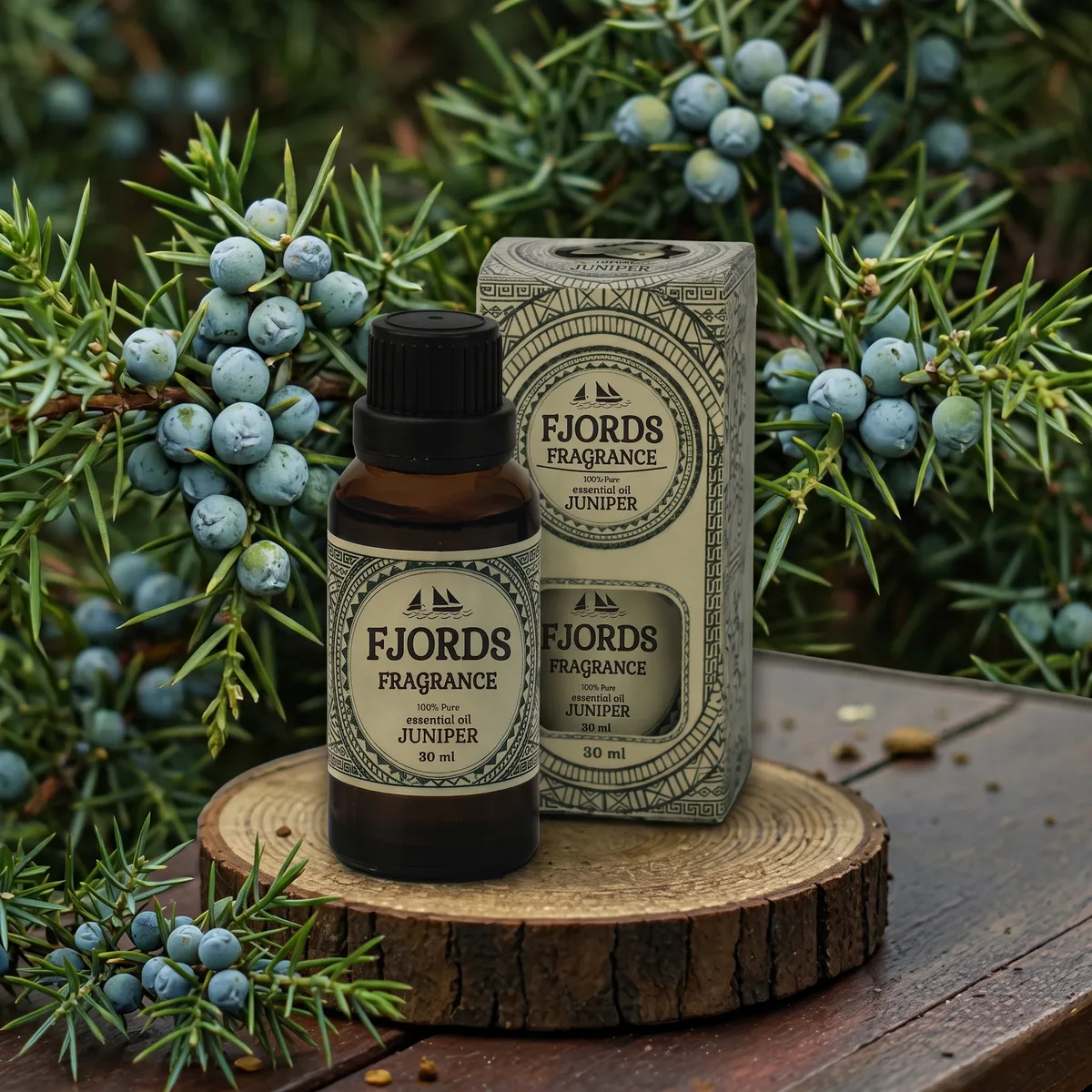
Juniper essential oil is steam-distilled from the ripe berries of Juniperus communis, the low, spiny, blue-berried shrub that survives on ground almost nothing else wants: Baltic heath, Finnish rock, Alpine scree. The berries are not really berries at all but fleshy cones, and they take two to three years to ripen, which is part of why good juniper oil is never cheap. Ours is a berry distillation rather than the cheaper needle-and-wood oil, and the difference is audible on the first pour: berry juniper is clean, bright and dry, while wood juniper tends toward the harsh and the smoky.
Juniper has one of the strongest claims of any oil in this range to belong in a sauna. Across the Baltic and the Nordic countries juniper branches were bound into whisks, laid on benches, burned in smoke saunas and used to scour milk pails, partly for the scent and partly because the smell meant clean. It is also, of course, the plant that makes gin taste like gin. None of that tradition turns the oil into a medicine, and it does not treat or cure anything, but it does explain why juniper steam feels ceremonial in a way that a citrus oil never quite manages.
Chemically, juniper berry oil runs on alpha-pinene, sabinene, myrcene and limonene. That combination is what gives it the dry, peppery-green character and the faint gin-like sparkle that people recognise before they can place it.
Scent Profile
Juniper opens sharp, green and resinous, with a peppery crackle at the top that wakes a room up. The heart is drier than any conifer needle oil: woody, faintly balsamic, with a clean bitterness that keeps it from ever being sweet. The dry-down is quiet and slightly smoky, more like a forest floor than a tree.
It is a more grown-up scent than the needle oils. Where spruce and pine smell like the living tree, juniper smells like the landscape the tree stands on: stone, heath, cold air.
In the Sauna
Juniper is a mild to medium sauna oil, and its dryness means a light hand pays off:
- 1. Prepare the water first. About 500 ml of warm water in the bucket or ladle jug.
- 2. Add 3-5 drops of juniper oil. Start at 3. Juniper is more assertive than fir or spruce and takes over a small room quickly.
- 3. Stir well. Oil and water do not mix, so agitate just before each pour.
- 4. Ladle small amounts over hot stones. Pour gradually; the peppery top note arrives first and settles within a minute.
- 5. Repeat sparingly. One scented pour every 10-15 minutes. Juniper accumulates in a way that softer oils do not.
Never pour undiluted oil onto the stones. Neat essential oil is flammable, can flash on a hot heater and leaves a burnt, acrid residue. Dilute in water first and air the room between sessions. Our essential oil dosage guide explains the amounts across the whole range, and the complete sauna scents guide shows where juniper sits among the rest.
At Home
- Diffuser. 3-5 drops. Juniper is a good choice for a room that needs to feel aired rather than perfumed - a study, a hallway, a gym corner.
- Winter blend. Juniper with a conifer and a citrus makes a dry, clean room scent that does not read as festive, which is useful in January.
- Body oil. Around 2 percent in a carrier, roughly 12 drops per 30 ml, traditionally used after exertion. See the carrier oils guide for the right base.
- Linen and cupboards. A drop on a wooden block in a wardrobe; juniper was used for exactly this long before anyone bottled it.
Blending Guide
Juniper is a structural oil: it gives a blend spine rather than sweetness. Ratios are by drops.
| Partner oil | Suggested ratio | The mood it makes |
|---|---|---|
| Spruce | 1 : 2 juniper to spruce | Heath and forest together. The spruce sweetens the juniper just enough to make it hospitable. |
| Lemon | 1 : 1 | Gin and tonic in steam form - dry, sparkling and genuinely refreshing on a summer evening. |
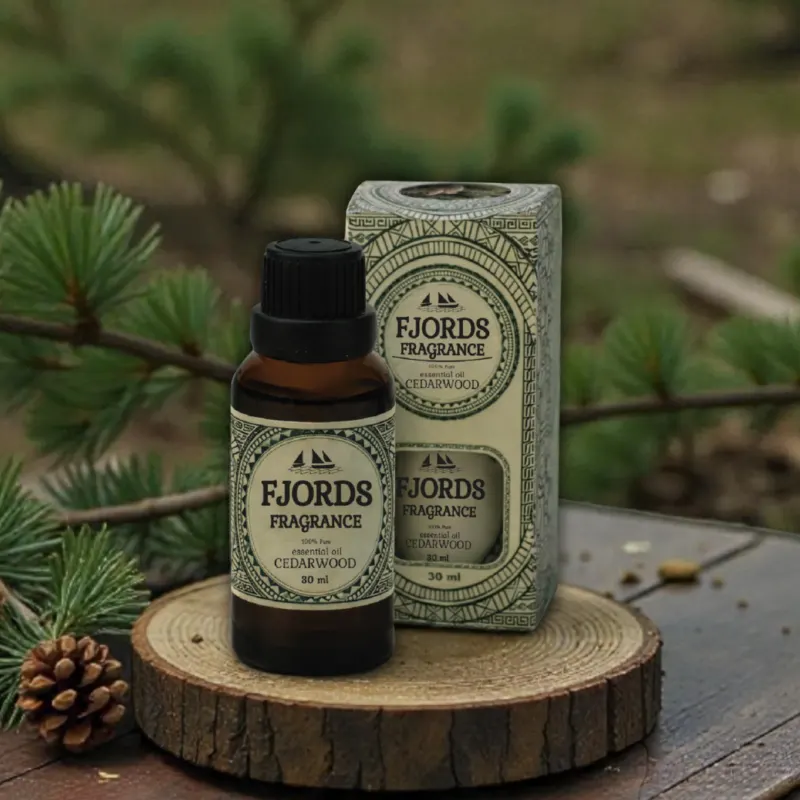
| Cedarwood | 1 : 1 | Old timber and cold stone. A serious, grounding sauna for the end of a hard week. |
| Lavender | 1 : 2 juniper to lavender | The herbal side of juniper drawn out, with the peppery edge sanded down for a wind-down session. |
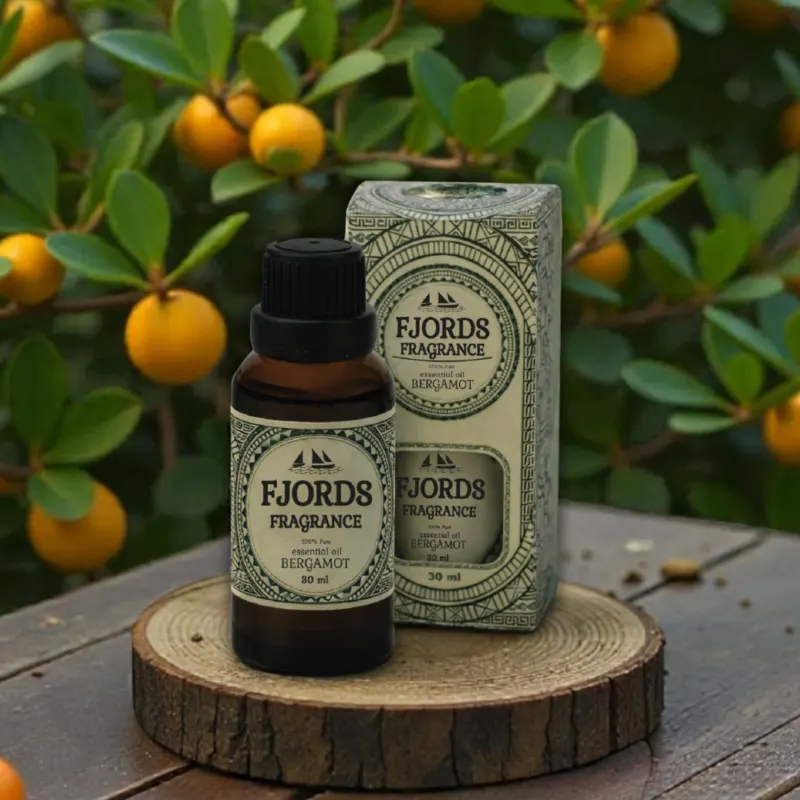
| Bergamot | 1 : 1 | Bright, dry and faintly bitter - the most elegant pour in this list. |
All five partners are from our own range.
Key Characteristics
| Feature | Description |
|---|---|
| Aroma Profile | Dry, resinous and peppery green with a clean gin-like sparkle and a faintly smoky finish. |
| Intensity | Medium - assertive in steam despite being classed as a mild oil, so start low. |
| Composition | 100% pure Juniperus communis essential oil, steam-distilled from the ripe berries rather than wood or needles. |
| Volume | 30 ml in UV-protective dark glass with a dropper. |
| Origin | Wild-harvested juniper from Northern and Central European heath and upland. |
| Shelf Life | 3-4 years unopened; best used within 12-24 months after opening. |
Storage & Quality
Juniper is monoterpene-heavy, so the same rule applies as to the conifers: closed bottle, cool shelf, no sunlight, no decanting into half-empty jars. Oxidised juniper loses its sparkle and gains a flat, turpentine quality, and like other oxidised terpene oils it is more likely to irritate skin than fresh oil.
Quality varies more in juniper than in almost anything else we sell, because berry oil is expensive and wood or needle oil is not. Berry distillation smells bright and dry; wood distillation smells heavier and smokier and is sometimes sold under the same name. If a juniper oil is notably cheap, that difference is usually the reason.
Safety Information
- Never take it internally. Gin is flavoured with berries, not with essential oil, and the oil is not food.
- Dilute for skin. About 2 percent in a carrier for adults, with a patch test if your skin reacts easily.
- Pregnancy. Juniper is traditionally avoided during pregnancy. We follow that convention rather than argue with it: if you are pregnant or trying to be, leave this one on the shelf and ask your midwife or doctor.
- Kidney claims. You will read that juniper is hard on the kidneys. The evidence behind that warning is thin and largely historical, but it is repeated widely enough that anyone with kidney disease should raise it with a specialist rather than take our word either way.
- Pets. Not safe around cats, and strongly scented steam is hard on birds. Keep animals out of a scented sauna.
- Keep away from open flame and out of reach of children.
Frequently Asked Questions
Q: Is juniper oil the same thing that flavours gin?
A: Same plant, different product. Gin is flavoured by distilling spirit with the berries themselves. The essential oil is a concentrate of the aromatic fraction, and it is not for drinking or flavouring anything.
Q: How many drops of juniper oil go in a sauna bucket?
A: 3-5 drops in about 500 ml of water. Start at 3, because juniper reads stronger in steam than its classification suggests.
Q: Berry oil or needle oil - does it matter?
A: It matters a lot. Berry distillation is bright, dry and clean; needle and wood distillation is heavier and smokier and much cheaper to produce. Ours is berry.
Q: Why is juniper oil more expensive than pine or spruce?
A: The berries ripen over two to three years, they are picked by hand from a spiny shrub, and the yield per kilo is low. There is no way to make it cheap without changing what is in the bottle.
Q: Can I use juniper in the sauna while pregnant?
A: We would not. Juniper is traditionally avoided in pregnancy, and a scented pour is not worth the question mark. Choose an unscented session or ask your own clinician.
Q: What does juniper blend with best?
A: Conifers for a forest, citrus for a dry sparkle, cedarwood for weight. The blending table above gives five combinations from our own range.
Q: Does juniper steam smell like gin?
A: Faintly, at the top. Underneath it is drier and more resinous than the drink, and the smoky finish is something gin never shows.
Q: Can I put the oil on juniper whisks or branches?
A: There is no need, and neat oil on a hot whisk is a skin risk. If you use a whisk, let it do its own work and keep the oil in the bucket.