Description
Cinnamon essential oil is steam-distilled from the inner bark of Cinnamomum verum, the Ceylon cinnamon tree of Sri Lanka and southern India. The bark is harvested from young shoots, the outer layer scraped away, and the thin inner bark dried into the quills that end up in kitchen cupboards. Distilling those quills gives a dense, amber, unmistakable oil that smells like the spice with the volume turned all the way up. It is the strongest oil we sell, and this page is written accordingly.
Cinnamon was traded across the Indian Ocean long before Europe knew where it came from; Arab merchants guarded the source with invented stories, and the search for a direct route was one of the reasons the Portuguese ended up in Sri Lanka. None of that history makes the oil a medicine, and it treats and cures nothing. It explains why the scent reads as expensive and festive in almost every culture that has met it.
Chemically, bark oil is dominated by cinnamaldehyde, usually between sixty and seventy-five percent, with eugenol and linalool behind it. Cinnamaldehyde is what makes cinnamon smell like cinnamon, and it is also one of the best-documented skin sensitisers in aromatherapy. The bark oil and the leaf oil of the same tree are different materials: leaf oil is eugenol-led, closer to clove, and considerably gentler. Ours is the bark, which is why the safety section below is longer than usual.
Scent Profile
Cinnamon opens hot and sweet at once, with a rush of spice that fills a room within seconds. The heart is rich and rounded, warmer and less sharp than the first impression, with a dry woodiness underneath. The dry-down is long, sweet and faintly resinous, and it lingers on wood and fabric well into the next day.
Against the other strong oils in our range, cinnamon is the only one that reads as warm rather than cold: eucalyptus and peppermint cool a room, cinnamon heats it. Its nearest relative on the shelf is oregano, another one-to-two-drop oil, though oregano is savoury where cinnamon is sweet.
In the Sauna
Cinnamon sits in the very strong band with camphor and oregano, and the dose is the smallest we recommend for anything:
- 1. Prepare the water first. About 500 ml of warm water in the bucket or ladle jug.
- 2. Add 1-2 drops of cinnamon oil. One is a real dose. Two is a festive one. Three is a mistake most people make only once.
- 3. Stir well so the oil disperses; cinnamon is dense and sinks rather than floats.
- 4. Ladle small amounts over hot stones. The scent arrives immediately and builds for a minute; wait before you pour again.
- 5. Do not repeat often. One scented pour in a session is often enough. Cinnamon steam can sting eyes and airways, and more of it does not make a nicer room.
Never pour undiluted oil onto the stones, and never let cinnamon touch bare skin in the sauna, including a splash from the ladle. Undiluted oil is flammable, can flash on a hot heater, and cinnamon on hot skin burns. Air the sauna between sessions. The reasoning behind our dosing bands is in the guide to essential oil dosage for sauna, and the complete sauna scents guide shows where cinnamon sits against every other scent we sell. If anyone in the room has asthma, sensitive eyes or a young child with them, choose a different oil for that session.
At Home
- Diffuser. 2-3 drops, not the usual 3-5. Cinnamon is the December oil, and it makes a hallway smell like baking without anyone baking.
- Winter blends. A single drop of cinnamon in a blend of orange and cedarwood is the classic festive room scent, and one drop is genuinely enough.
- Pine cones and wood. A drop on a dry pine cone or an unfinished wood block in a bowl scents a room for weeks. Never on fabric, where it stains, and never where a child or pet can reach it.
- Skin: no. See the safety section. Cinnamon bark oil is an air scent in our hands, not a body oil, and we would rather say that plainly than bury it in a footnote.
Blending Guide
Cinnamon is a seasoning, not an ingredient: one drop changes a blend, two dominate it. Ratios are by drops, and the cinnamon side is always the small one.
| Partner oil | Suggested ratio | The mood it makes |
|---|---|---|
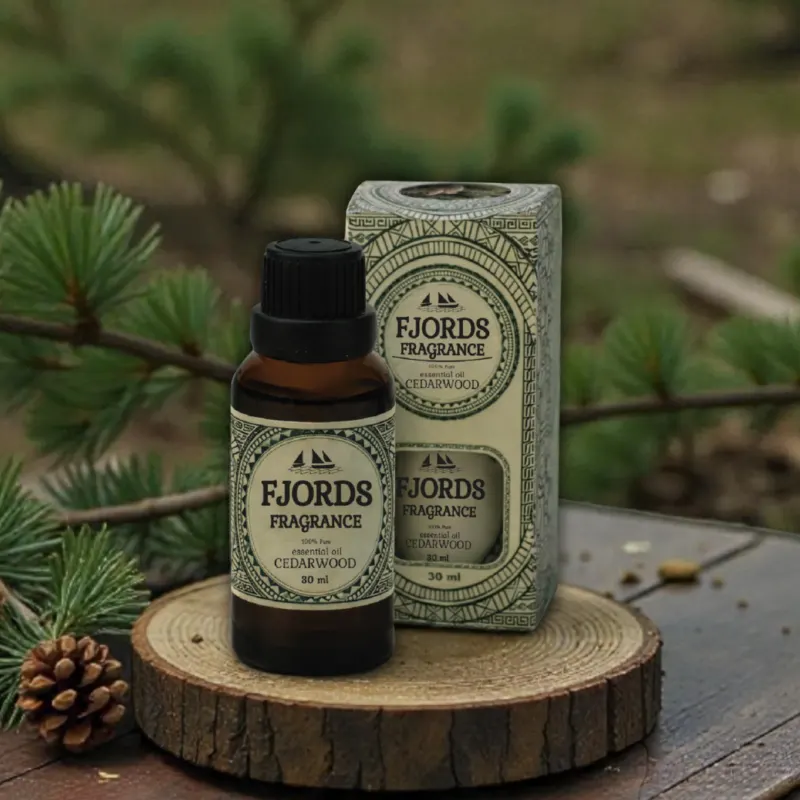
| Cedarwood | 1 : 4 cinnamon to cedarwood | Spiced timber - the warmest room in the range, built for a dark afternoon. |
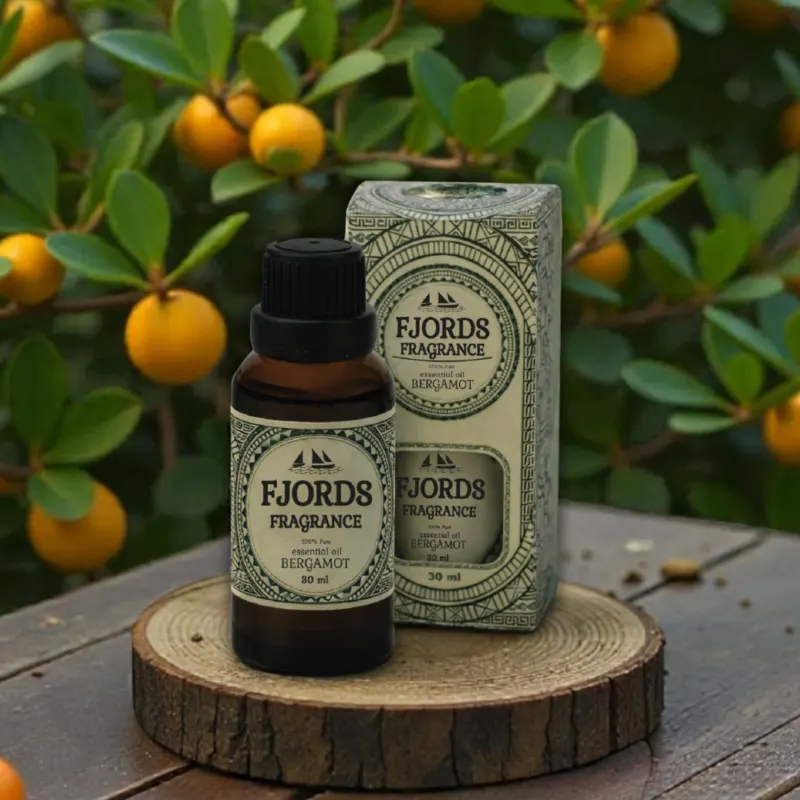
| Bergamot | 1 : 4 cinnamon to bergamot | Bright citrus with a warm spice floor, elegant rather than kitchen-like. |
| Patchouli | 1 : 3 cinnamon to patchouli | Dark, sweet and enveloping, a winter evening blend with real weight. |
| Lavender | 1 : 4 cinnamon to lavender | Unexpectedly good - the spice keeps the lavender from feeling sleepy. |
| Spruce | 1 : 4 cinnamon to spruce | The Nordic Christmas pour: green needles, warm spice, nothing synthetic. |
All partners come from our own range.
Key Characteristics
| Feature | Description |
|---|---|
| Aroma Profile | Hot, sweet and rich cinnamon spice over a dry, faintly resinous woody base with a very long finish. |
| Intensity | Very strong - the smallest-dose oil in the range, 1-2 drops in sauna water and 2-3 in a diffuser. |
| Composition | 100% pure Cinnamomum verum bark essential oil, steam-distilled from the inner bark. Cinnamaldehyde-led; not the gentler leaf oil. |
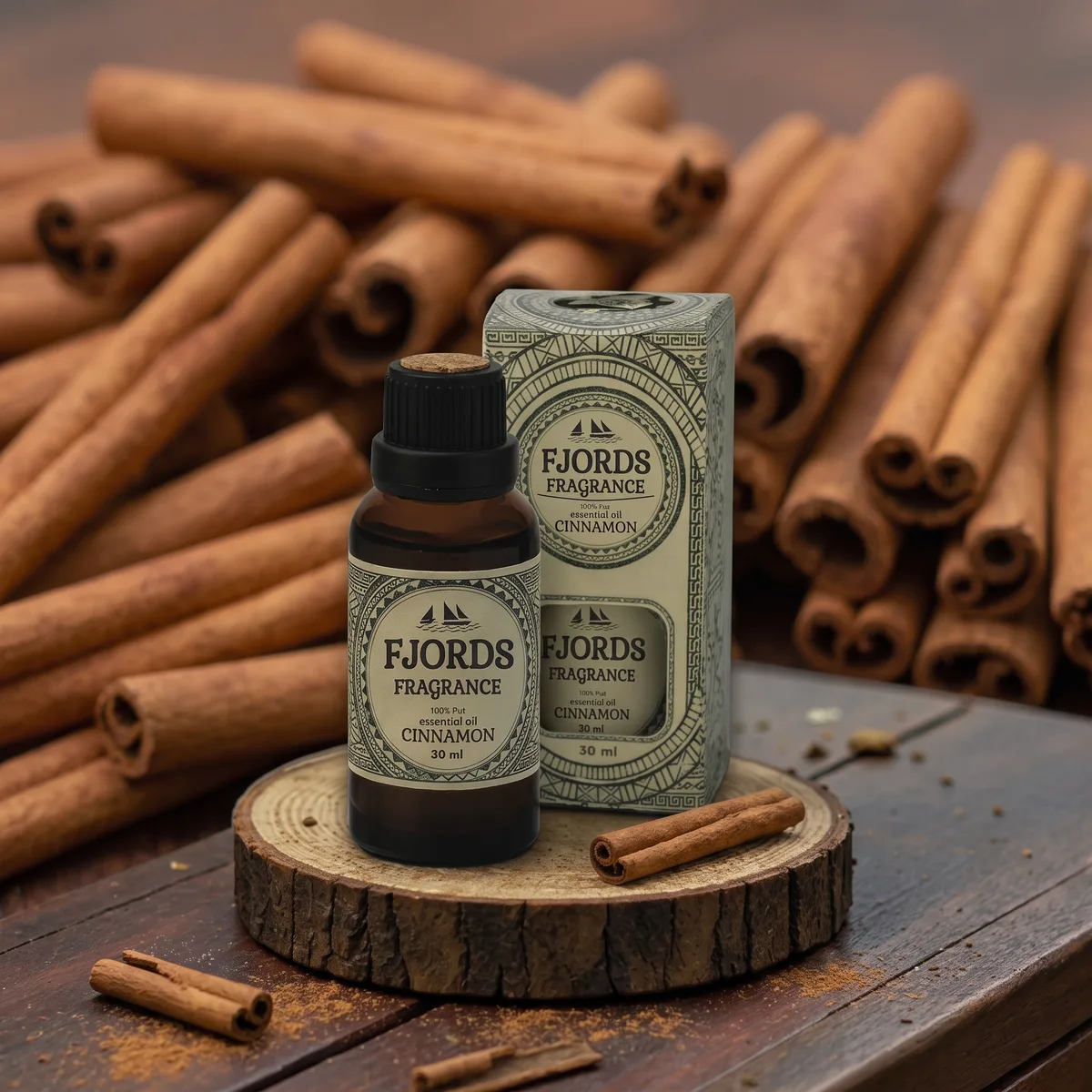
| Volume | 30 ml in UV-protective dark glass with a dropper. |
| Origin | Ceylon cinnamon from Sri Lanka and southern India. |
| Shelf Life | 3-4 years unopened; best used within 24 months after opening. |
Storage & Quality
Cinnamon bark oil keeps well by essential-oil standards; cinnamaldehyde is more stable than the terpenes in citrus and conifer oils. The rules do not change, though: cap closed, cool shelf, out of the light, and away from anything it could stain, because a leaking cinnamon bottle marks wood and cloth permanently.
On quality, the thing to check is which part of the tree you are buying. Leaf oil is cheaper, eugenol-led and smells more like clove; bark oil is the sweet, hot cinnamon most people expect. Both are sold as "cinnamon oil", sometimes without saying which. Cassia, Cinnamomum cassia, is a third material, harsher and even higher in cinnamaldehyde, and it is often what a very cheap cinnamon oil actually is.
Safety Information
- Not for skin. Cinnamaldehyde is a potent skin sensitiser, and the fragrance industry's own standards restrict it to very low levels in anything that stays on skin. We do not recommend cinnamon bark oil as a body oil, in a bath or in a massage blend, and we would rather lose the sale than the reader's forearm. Enjoy it in the air.
- Never take it internally. The spice in your kitchen is bark; the oil is a concentrate roughly a hundred times stronger, and it is not food.
- Eyes and airways. Cinnamon steam stings. Keep the dose at one or two drops, sit away from the stones, and if it catches your eyes rinse with water rather than rubbing.
- Children and pregnancy. Not appropriate around babies and young children in hot steam, and traditionally avoided in pregnancy. Choose an unscented session and put the question to a qualified professional.
- Pets. Not safe around cats, and cinnamon is also poorly tolerated by dogs. Keep animals out of a scented sauna and diffuse only in ventilated rooms they can leave.
- Existing conditions. Asthma, sensitive skin, allergies to spices or perfume: this is a scent, not a treatment, and your own clinician knows more about your case than a shop does.
- Flammable. Never neat onto stones; keep away from open flame.
Frequently Asked Questions
Q: Is this cinnamon bark or cinnamon leaf oil?
A: Bark, steam-distilled from the inner bark of Ceylon cinnamon. Leaf oil from the same tree is eugenol-led, closer to clove and considerably gentler. They are not interchangeable, and the bark oil is the one with the strict skin rules.
Q: How many drops of cinnamon oil go in a sauna bucket?
A: 1-2 drops in about 500 ml of water. One is a real dose. It is the strongest oil we sell.
Q: Can I use cinnamon oil on my skin?
A: We do not recommend it. Cinnamaldehyde is a well-documented skin sensitiser, and the fragrance industry restricts it to very low levels in leave-on products. Use it as an air scent, in a diffuser or in sauna steam.
Q: What is the difference between cinnamon and cassia?
A: Different species. Cinnamomum verum is Ceylon cinnamon, sweeter and finer; Cinnamomum cassia is harsher, higher in cinnamaldehyde and cheaper. A very cheap cinnamon oil is often cassia.
Q: Is cinnamon steam good for you?
A: It is a comforting, festive scent for many people, and that is the honest claim. It is not a treatment for anything, and for some people, including anyone with asthma or sensitive eyes, it is simply too strong. We make no health claims for it.
Q: Why does a drop go so far?
A: Cinnamaldehyde is intensely aromatic and cinnamon oil is dense. A single drop in a blend of five or six drops of other oils is usually the right proportion.
Q: What does cinnamon blend with?
A: Cedarwood, citrus and patchouli above all, always with cinnamon as the small part. The table above gives five ratios from our own range.
Q: Can I use it in a steam room or a hot tub?
A: In a steam generator only if the manufacturer allows scent in the reservoir, and at the same one-drop caution. Never in a hot tub: essential oils foul the filtration, and cinnamon in warm bathwater is exactly the skin contact we advise against.