The Perfect Gift Guide: Essential Oils for Every Occasion
The best essential oil gift matches a ritual the person already has - sauna evenings, a diffuser on the desk, a long weekend bath - rather than the scent you happen to love yourself. Below, each recipient gets one or two oils, why they fit, and an honest note on what the bottle actually smells like - a gift should not smell like a surprise. If you would rather not guess, take our scent finder quiz answering as the person you are choosing for - it narrows the range to a shortlist in about a minute.
Three Questions Before You Choose
- Where will it live? A sauna bucket, a diffuser or a bath shelf - the setting decides the oil more than taste does.
- Forest or flowers? Wood-and-resin people lean pine, spruce or cedarwood; floral people lean rose, jasmine or neroli.
- Loud or quiet? Peppermint and eucalyptus announce themselves; cedarwood and clary sage stay in the background.
Two answers out of three are enough for the sections below.
For the Sauna Lover
Pair eucalyptus with pine. Eucalyptus is the classic loyly scent: sharp, cool and camphor-green, the smell most people mean when they say "spa". Pine is its warmer Nordic counterpart - dry resin, sun-heated bark, fresh sawdust. Add a use note to the gift: pine takes 3-5 drops per 500 ml of ladle water, eucalyptus is stronger and wants only 2-3 - full counts in our sauna dosage guide. Unsure which forest note they prefer? This comparison settles it; the complete sauna scent guide and our piece on Estonian smoke sauna scents make fine reading companions to the bottle. If they own an infrared cabin rather than a steam sauna, the method changes - see infrared sauna essential oils.
For a New Home
Cedarwood and lemon are the housewarming pair. Cedarwood smells like warm dry wood with a soft balsamic sweetness - quiet, grounding, and exactly what makes empty new rooms feel settled. Lemon is pure zest: bright, clean, and honest about its one flaw - it fades within the hour, making it a top-up scent for kitchens rather than a lingering one. Both work at 3-5 drops in a diffuser; the cedarwood guide covers wood-scent layering.
For the Stressed Friend
Lavender and bergamot. Real lavender is herbal and slightly camphorous - closer to a dry summer field than to the sweet soap version, and better for it. Bergamot is a bitter citrus with a floral edge; if they drink Earl Grey tea, they already know it. Both are traditionally reached for at the end of hard days - and to say it plainly, they are scents, not treatments. A diffuser ritual will not fix a workload, but it can mark the moment the workday ends. Suggest the diffuser route (3-5 drops) rather than skin - bergamot has a sun caveat, covered below - and add the lavender guide as a companion card.
For the Romantic
Rose or jasmine - the two most extravagant florals we make. Rose oil is denser and spicier than a fresh rose: honeyed, deep, almost jammy. Jasmine is a heavy white floral with a faint animal warmth at full strength; diluted, it turns radiant. Either works in a diffuser, or at no more than 0.6% in a carrier oil (about 1 drop per 10 ml) for a massage blend. Thousands of blossoms go into each bottle, which is exactly what makes one feel like a gesture.
For the Minimalist
One bottle, no set. Clary sage is the quietly interesting choice: dry, herbal and nutty, with a tea-like softness people struggle to place and keep returning to. If their taste runs to the outdoors, a single bottle of spruce - greener and softer than pine - handles diffuser, bath and sauna duty without demanding attention.
For the Fitness Enthusiast
Peppermint, plus the eucalyptus from the sauna section if they steam after training. Peppermint is exactly what it promises - cold, sweet menthol, no subtlety - a scent that suits post-training sauna rounds. It is potent: 2-3 drops per 500 ml of sauna water is plenty.
For Someone Who Has Everything
Neroli - bitter orange blossom. Fresh, green and honeyed at once, more delicate than jasmine and far less common as a gift, which is rather the point. The dark-horse alternative is patchouli: earthy, dark and sweet in a damp-cellar way. It is genuinely divisive - gift it only when you know they already love it.
Quick Reference
| Recipient | Oils | Honest scent note |
|---|---|---|
| Sauna lover | Eucalyptus + pine | Cool camphor-green + dry forest resin |
| New home | Cedarwood + lemon | Warm dry wood + bright, short-lived zest |
| Stressed friend | Lavender + bergamot | Herbal field lavender + Earl Grey citrus |
| Romantic | Rose or jasmine | Honeyed depth or radiant white floral |
| Minimalist | Clary sage or spruce | Nutty herbal tea or soft green forest |
| Fitness enthusiast | Peppermint | Cold, sweet, unapologetic menthol |
| Has everything | Neroli or patchouli | Green orange blossom or dark earth |
Packaging Turns a Bottle into a Gift
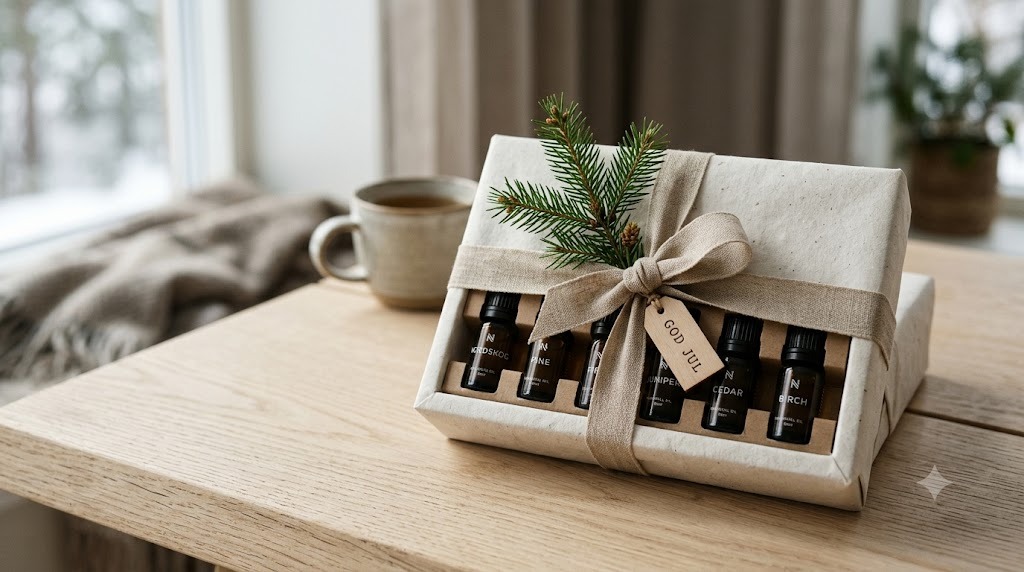
A dark glass bottle with a clean label is already beautiful - resist over-wrapping it. What elevates the gift is a handwritten card with three lines: what the oil is, where it comes from, and how to use it (for sauna oils, copy the drop counts above; for diffusers, "3-5 drops" is enough). Naming the ritual helps too: "for your Friday sauna" reads more personally than any ribbon. For a small set, two or three oils from one family - the forest trio of pine, spruce and cedarwood from the collection - feels more considered than five random bottles.
Safety Notes Worth Adding to the Card
- Essential oils are never ingested - none, ever, in any amount.
- Bergamot and lemon are photosensitising on skin: no sun exposure for 12-18 hours after topical use.
- Tea tree is toxic to cats and dogs - it is not a gift for a home with pets - and many oils are unsafe around cats in general. For pet households, keep diffusion of other oils to ventilated rooms the animals can leave, and never apply oils to an animal.
- Skip camphor and oregano as gifts - they are potent utility oils measured in 1-2 drops, not pleasure scents.
- Pregnant recipients, or anyone managing a health condition, should treat oils as scents rather than remedies and consult a specialist first. For homes with young children: keep the bottles out of reach and go easy on peppermint and eucalyptus.
Frequently Asked Questions
Q: What is the safest choice if I know nothing about the person?
A: Lavender or cedarwood - familiar, forgiving, and useful in any diffuser. If you know even a little about their taste, the scent finder quiz answered on their behalf will do better than a safe default.
Q: Can I gift essential oils to someone with cats or dogs?
A: With care. Tea tree is toxic to cats and dogs, and many oils are risky around cats even when diffused. For a cat household, a sauna-only oil that stays in the sauna is the safer gesture - their vet is the right person to ask.
Q: Are bath oils a good gift idea?
A: Yes, with one instruction attached: the oil must be dissolved in a carrier oil or a solubilizer before it meets the water. Salt and milk do not disperse essential oils - undissolved drops float and can sit on skin at full strength.
Q: How long will a bottle actually last?
A: At typical use - 3-5 drops per diffuser session, 1-5 drops per 500 ml of sauna water - a standard bottle lasts months. Stored dark and cool, citrus oils keep about a year; most others longer.
Q: The recipient owns a sauna - would a fragrance oil set smell nicer?
A: No. Fragrance oils are not made for high heat and do not belong on sauna stones - here is the full explanation. For proper loyly, use true essential oils, correctly dosed - our loyly guide explains why steam carries scent so well.